 0
0
 0
0
The EU €90B Ukraine funding plan is facing serious uncertainty after Hungary threatened to block the proposed financial package unless Russian gas transit through the Druzhba pipeline resumes.
The development has created fresh tension within the European Union at a critical moment for Ukraine, which is heavily reliant on continued financial support to sustain its war effort and economic stability.
Hungary Threatens Veto Over Gas Dispute
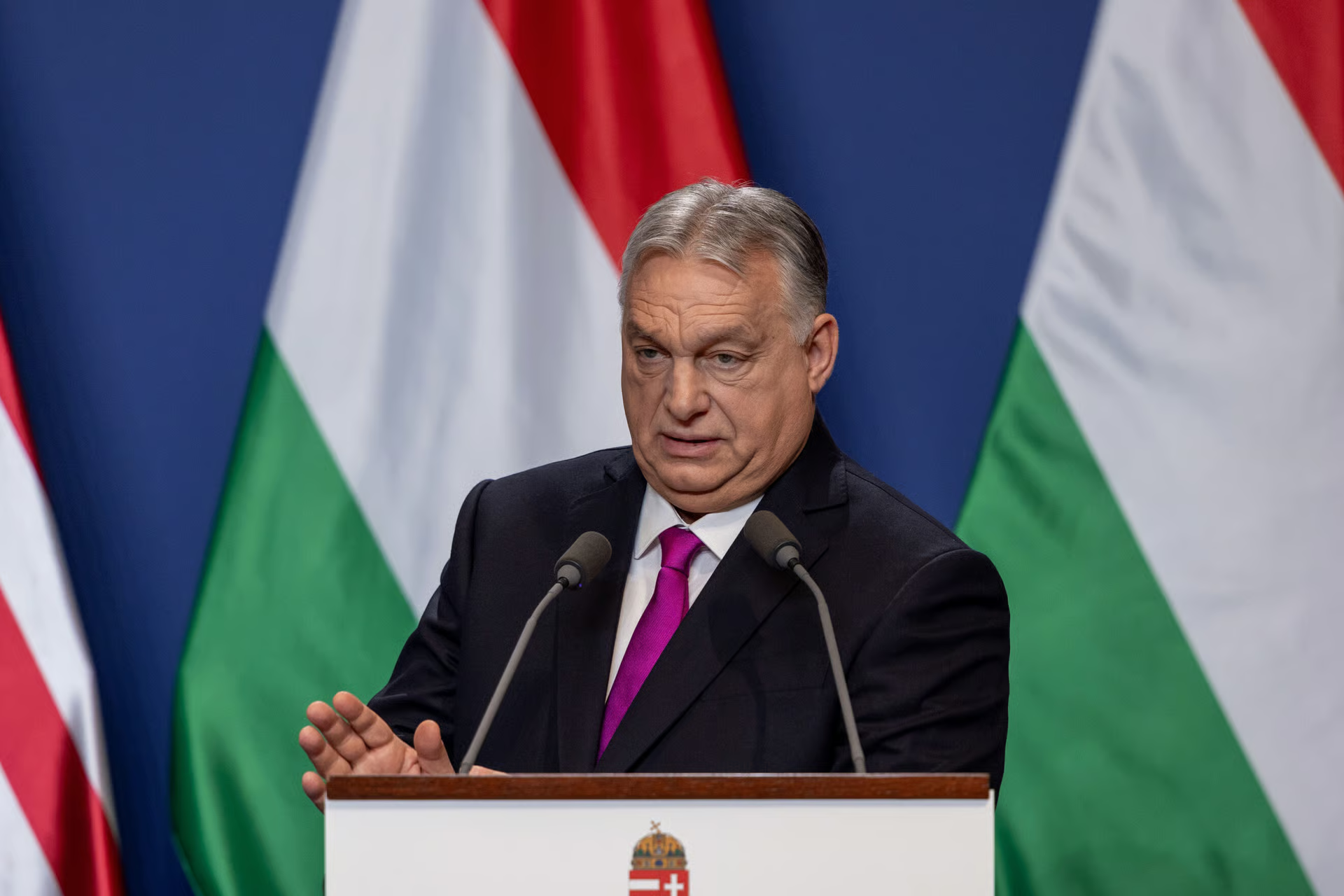
Hungary’s government issued its warning during diplomatic discussions in Brussels, signaling it may veto the EU €90B Ukraine funding plan unless the flow of Russian energy supplies through Ukraine is restored.
Hungarian Prime Minister Viktor Orbán has accused Ukraine of deliberately disrupting oil transit to Hungary for political reasons. In a statement posted on X, Hungarian Foreign Minister Péter Szijjártó claimed Ukraine coordinated the halt with Brussels and Hungary’s opposition to create supply instability before Hungary’s upcoming elections.
Ukraine has denied the accusations, stating that Russian attacks have damaged critical infrastructure, impacting energy transit routes.
Why the EU €90B Ukraine Funding Plan Matters
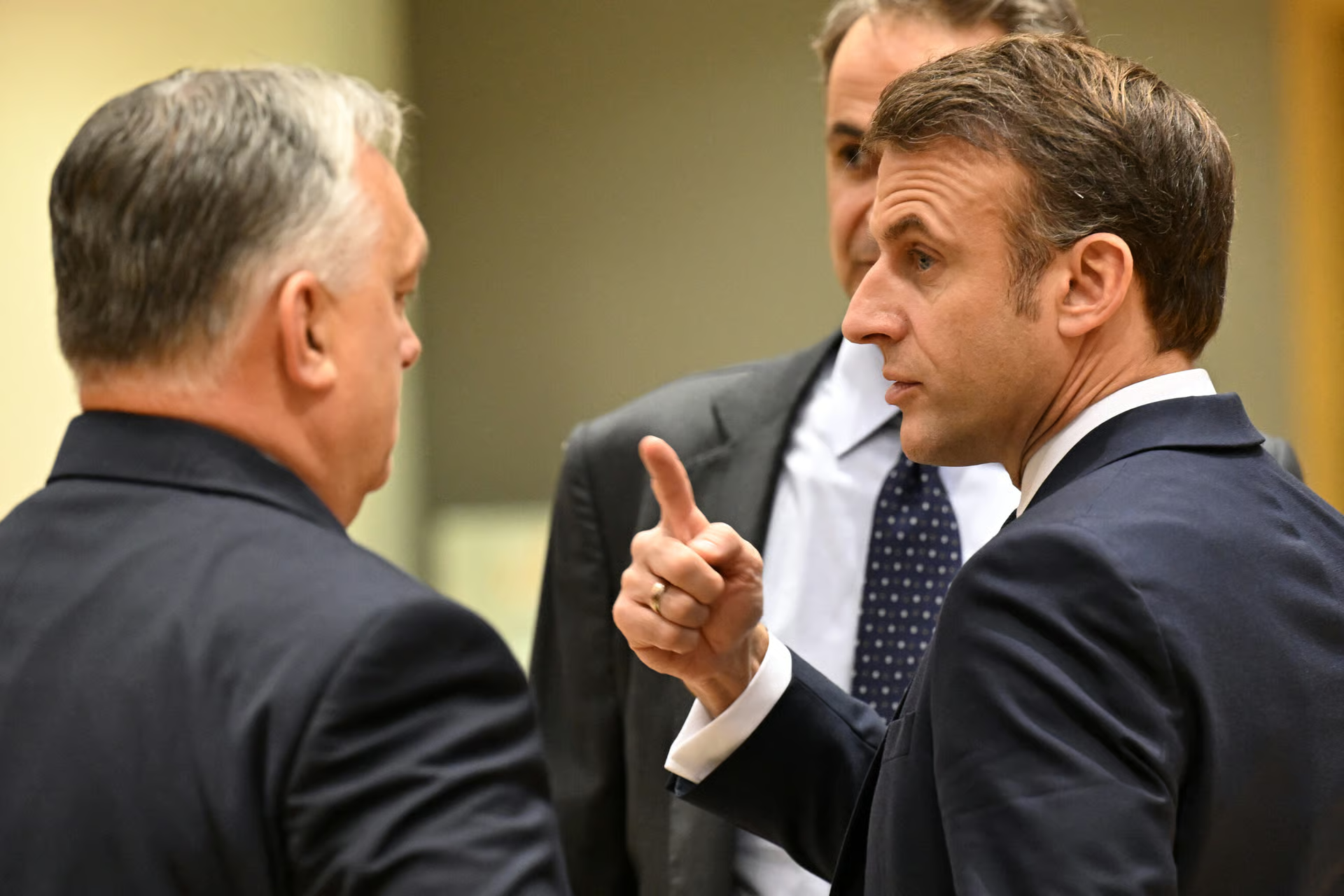
The EU €90B Ukraine funding plan was agreed upon by EU leaders in December after months of negotiations. The financial package is intended to provide long term macro financial assistance to Kyiv as it continues defending itself against Russian aggression.
Without the EU €90B Ukraine funding plan, Ukrainian officials warn that state finances could begin tightening as early as April. A funding gap could weaken Ukraine’s position in ongoing peace negotiations and reduce its ability to sustain military operations.
The proposed loan requires legislative approval across EU institutions. While two supporting bills only require a qualified majority vote, one crucial component requires unanimous backing from all member states.
That unanimity requirement gives Hungary the power to block the entire EU €90B Ukraine funding plan.
Dispute Over the Druzhba Pipeline
At the center of the dispute is the Druzhba pipeline, one of the key routes transporting Russian oil and gas to Central Europe.
Hungary and Slovakia have expressed frustration over disruptions to Russian energy transit through Ukraine. In response to the ongoing dispute, Hungary and Slovakia temporarily halted diesel exports to Ukraine, escalating tensions.
The European Commission has reportedly convened emergency discussions in an effort to mediate the standoff and preserve the EU €90B Ukraine funding plan.
Election Politics in Hungary
The standoff comes at a sensitive political moment for Orbán, who faces a competitive election after more than 15 years in power.
Analysts suggest that taking a hard line on Ukraine and energy policy may resonate with segments of the Hungarian electorate concerned about rising fuel prices and economic stability.
Hungary has frequently taken a more cautious approach toward supporting Ukraine compared to other EU member states. Budapest has repeatedly pushed back on sanctions against Russia and financial aid packages tied to the conflict.
EU Leaders Attempt Damage Control
EU ambassadors were preparing to finalize approval of the EU €90B Ukraine funding plan ahead of the four year anniversary of Russia’s invasion of Ukraine.
However, Hungary’s ambassador to the EU requested that Hungary’s national parliament be granted the standard eight week scrutiny period for reviewing EU legislation. That move effectively delays the approval process and complicates the timeline.
Despite the current setback, EU officials remain hopeful that a compromise can be reached. In previous negotiations, the bloc made concessions by exempting Hungary, Slovakia, and Czechia from repaying borrowing costs associated with the loan.
Whether further concessions will be offered remains unclear.
Impact on Ukraine and the EU
If Hungary ultimately blocks the EU €90B Ukraine funding plan, the consequences could extend beyond Ukraine’s immediate financial needs.
A failed agreement may raise concerns about EU unity at a time when coordinated support for Ukraine is seen as strategically important. It could also complicate future financial packages and weaken the bloc’s negotiating position in broader geopolitical discussions.
For Ukraine, delays in securing funding could affect military procurement, public sector salaries, and infrastructure recovery.
For the European Union, the dispute highlights the ongoing challenge of maintaining consensus among 27 member states on sensitive foreign policy and financial matters.
What Happens Next
Diplomatic negotiations are expected to continue in the coming days as EU institutions seek to prevent a full collapse of the EU €90B Ukraine funding plan.
Observers note that Hungary has previously used veto threats as leverage in negotiations before ultimately agreeing to compromise solutions.
As discussions progress, the focus will remain on whether energy transit concerns can be resolved in a way that satisfies Hungary while preserving the financial lifeline intended for Ukraine.
The outcome will likely shape both EU unity and Ukraine’s financial stability in the months ahead.
For more news, please visit our Homepage