 0
0
 0
0
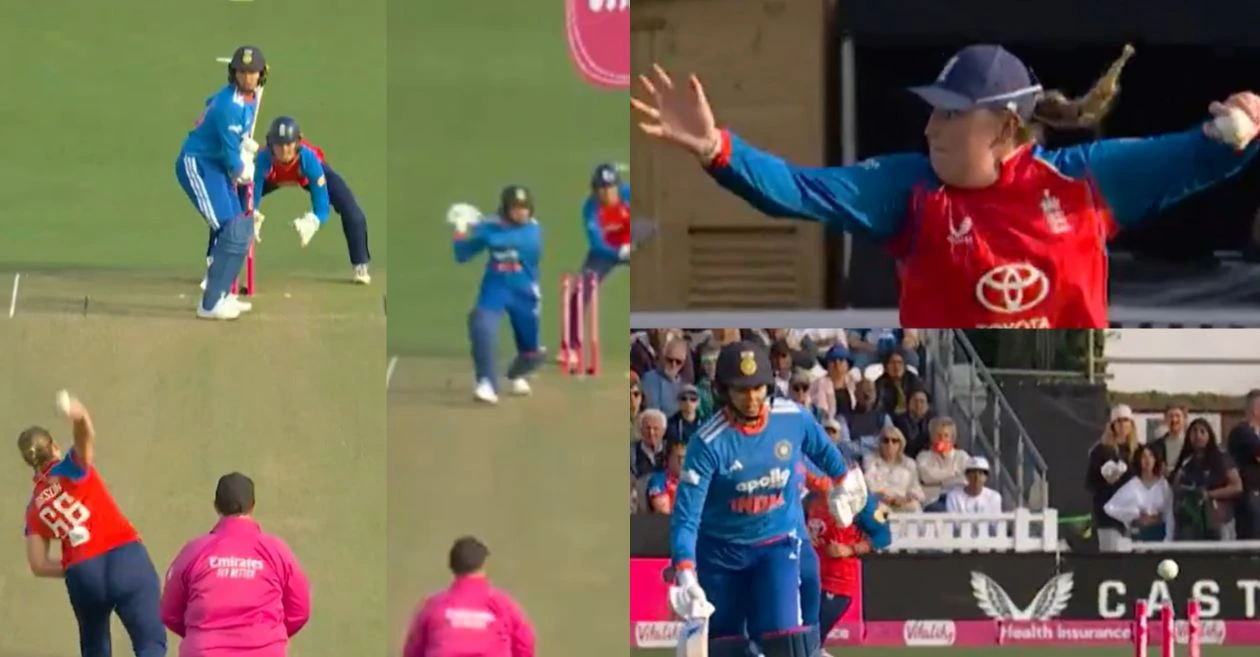
he Ecclestone direct hit run out became the defining moment of a high-intensity Women’s T20I contest between England Women and India Women, as Sophie Ecclestone produced a moment of sharp fielding brilliance to dismiss Yastika Bhatia during a crucial phase of the series decider.
In a match filled with momentum swings, early breakthroughs, and aggressive batting intent, it was this single fielding effort that shifted control back toward England at a decisive stage. The Ecclestone direct hit run out not only ended a dangerous innings but also broke a developing partnership that had begun to tilt the contest in India’s favour.

High-stakes T20I decider sets the tone at Taunton
The third Women’s T20I at Taunton carried significant pressure, with both sides entering the match tied in the series and aiming for a decisive win. The pitch offered good value for shots, encouraging aggressive stroke play from the outset.
India’s intent in the powerplay overs
India Women began with attacking intent, looking to capitalise on a strong batting surface. However, early setbacks slowed their momentum:
- Smriti Mandhana fell early after scoring 8 runs
- Shafali Verma managed 11 before losing her wicket
- The early dismissals placed pressure on the middle order
Despite these setbacks, India found stability through Yastika Bhatia, who quickly settled into rhythm and began scoring freely.
Yastika Bhatia’s aggressive counterattack
Yastika Bhatia played with confidence during her brief but impactful innings. She struck the ball cleanly and rotated strike effectively, building pressure on England’s bowling attack.
Her key contributions included:
- 32 runs off 18 balls
- Strike rate of 177.77
- Seven well-timed boundaries
At this stage, India appeared to be building a platform for a strong total, with momentum gradually shifting away from England.
Ecclestone direct hit run out changes the match momentum
The defining moment of the contest came in the 7th over, when the Ecclestone direct hit run out dramatically altered the course of India’s innings.
The build-up to the turning point
Bowling from Dani Gibson, India attempted to continue their aggressive approach. Yastika Bhatia stepped out and played a firm shot into the cover region, looking for a quick single or potential gap exploitation.
However, hesitation between the batters created an opening that England’s fielding unit quickly exploited.
Sophie Ecclestone’s decisive intervention
Sophie Ecclestone reacted instantly from the field:
- Collected the ball cleanly under pressure
- Read the hesitation from the batters early
- Delivered a rapid, accurate throw toward the stumps
The result was a direct hit that left Yastika Bhatia short of her ground. The Ecclestone direct hit run out ended a promising innings and immediately shifted momentum back to England.
Tactical impact of the dismissal
The dismissal had multiple effects on the match:
- Broken partnership at a crucial stage
- Slowed India’s scoring momentum
- Increased pressure on incoming batters
- Boosted England’s fielding intensity and confidence
In T20 cricket, such moments often define innings trajectories, and this was no exception.
England Women regain control after breakthrough moment
Following the Ecclestone direct hit run out, England Women regained control of the contest. Their bowlers tightened lines, and fielding energy visibly increased across the unit.
Defensive discipline and pressure building
England’s response after the dismissal focused on:
- Cutting boundary opportunities
- Maintaining tight infield placements
- Forcing India into riskier shot selections
The fielding standard remained consistently high, reinforcing the importance of the earlier breakthrough.
Psychological shift in the contest
Cricket matches at this level often swing on confidence, and the dismissal of Yastika Bhatia created a visible shift. India’s batting unit, which had been accelerating, was forced to rebuild again under pressure.
Match context: series decider intensity
The match formed part of a tightly contested series between England Women and India Women, with both teams showcasing high-quality performances across formats.
Why this moment stood out
The Ecclestone direct hit run out stood out because:
- It came at a key momentum phase
- It removed a set batter in form
- It was executed under pressure with precision
- It demonstrated elite fielding standards in women’s cricket
Broader tactical significance
Fielding has increasingly become a decisive factor in modern T20 cricket. Teams now invest heavily in athleticism, throwing accuracy, and anticipation, and this moment reflected that evolution clearly.
India’s innings reshaped after key dismissal
After the breakthrough, India’s innings required recalibration. The loss of Yastika Bhatia slowed their scoring rate and increased reliance on rebuilding partnerships.
Middle-order response challenges
India’s remaining batters faced:
- Increased scoreboard pressure
- Reduced batting momentum
- Higher risk requirements in later overs
The earlier aggressive platform was partially dismantled, requiring a more conservative approach in patches.
England’s sustained pressure
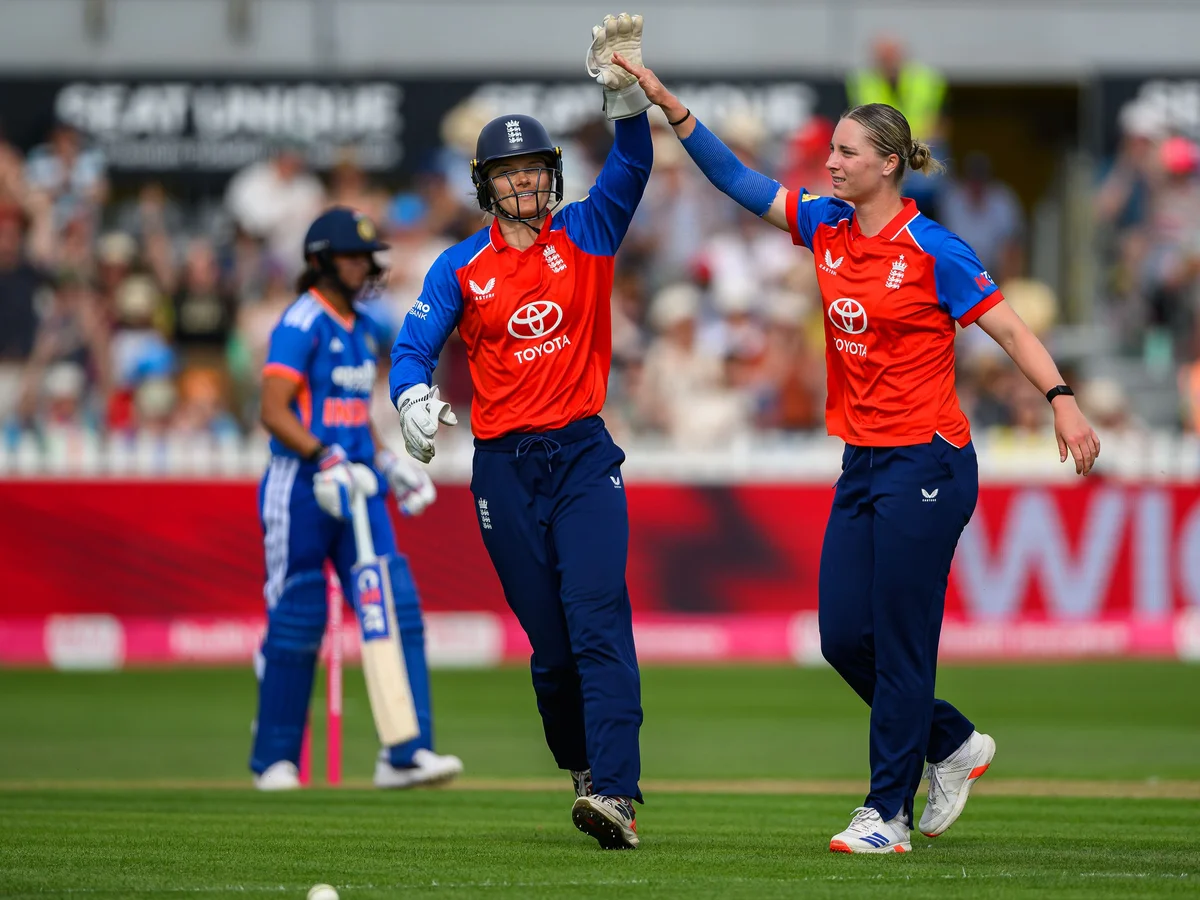
England capitalised by:
- Maintaining disciplined bowling lines
- Rotating bowlers effectively
- Applying consistent fielding pressure
The combination ensured India could not fully recover their earlier rhythm.
Ecclestone direct hit run out: defining fielding moment of the series
Beyond the match itself, the Ecclestone direct hit run out may be remembered as one of the standout fielding moments of the series.
Key takeaways from the dismissal
- Quick reaction time under pressure
- Accurate direct hit execution
- Awareness of batting hesitation
- Match-altering impact at a crucial stage
Such moments underline the importance of fielding excellence in modern international cricket.
FAQ
What made the Ecclestone direct hit run out important?
It removed set batter Yastika Bhatia at a crucial stage and shifted momentum back to England Women.
How did Yastika Bhatia perform before getting out?
She scored 32 runs from 18 balls with a strike rate of 177.77, hitting seven boundaries.
Which teams played in the T20I match?
The match was between England Women and India Women in the series decider.
Who else contributed early in the innings?
Smriti Mandhana and Shafali Verma provided starts but were dismissed early in India’s innings.
Conclusion
The Ecclestone direct hit run out proved to be a decisive turning point in the T20I clash between England Women and India Women. While India had built early momentum through aggressive batting, the sharp fielding intervention from Sophie Ecclestone disrupted their flow and restored England’s control. In a closely fought contest, moments like these underline how fielding excellence can define outcomes at the highest level.
Click here for more news