


 0
0
 0
0
The CrowdStrike AI cyber attacks report has revealed a sharp acceleration in cyber crime activity, with average breakout times falling to just 29 minutes in 2025. According to the latest findings, attackers are now moving 65 percent faster than in 2024, and in some cases, breaches unfold in seconds.
The research highlights how artificial intelligence is not only expanding enterprise attack surfaces but also enabling threat actors to scale operations more efficiently.

AI Enabled Attacks Surge by 89 Percent
According to the 2026 Global Threat Report from CrowdStrike, AI enabled attacks increased by 89 percent over the past year.
Cyber criminals are actively exploiting AI systems and injecting malicious prompts into legitimate generative AI tools across more than 90 organizations. These prompts are used to generate unauthorized commands aimed at credential theft and cryptocurrency theft.
Researchers also observed attackers exploiting vulnerabilities in AI development platforms to maintain persistence and deploy ransomware. In other cases, malicious AI servers were set up to impersonate trusted services in order to intercept sensitive enterprise data.
CrowdStrike CEO George Kurtz stated that as AI becomes embedded in development pipelines and SaaS platforms, it expands the attack surface available to adversaries.
Prompt Injection Attacks Gain Momentum
One of the emerging concerns in the CrowdStrike AI cyber attacks report is the rise of prompt injection techniques.
Threat actors are embedding hidden instructions inside phishing emails and other inputs to manipulate AI driven security systems. In one documented example, attackers inserted concealed prompt content into a phishing email to disrupt AI based email triage systems. The goal was to increase the likelihood of the malicious message bypassing detection.
Although researchers noted that prompt injection has not yet proven consistently effective at scale, it demonstrates how attackers are targeting AI system inputs rather than directly exploiting infrastructure.
This shift reflects a broader trend in which adversaries manipulate AI logic through crafted data instead of conventional exploits.
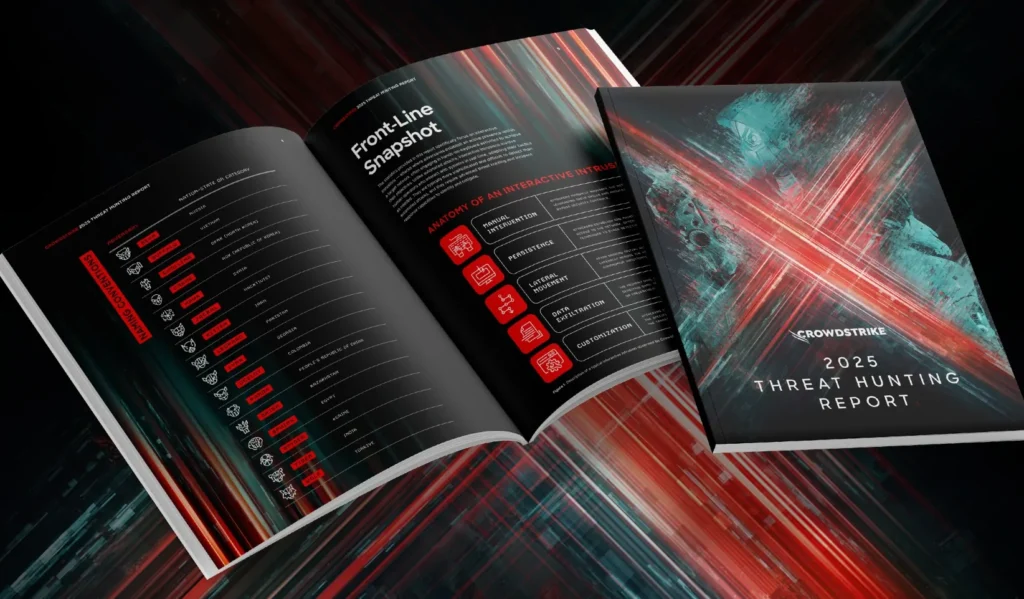
Breakout Times Hit Record Lows
The most alarming statistic in the CrowdStrike AI cyber attacks report is the dramatic reduction in breakout times.
Average breakout time in 2025: 29 minutes
Speed increase compared to 2024: 65 percent faster
Fastest recorded breakout: 27 seconds
Data exfiltration in one case: Began within four minutes
Breakout time refers to the period between initial compromise and lateral movement across systems. The shorter this window, the harder it becomes for security teams to detect and contain threats.
Adam Meyers, head of counter adversary operations at CrowdStrike, described the situation as an AI arms race, emphasizing that adversaries are compressing the time between intent and execution.
State Sponsored Hackers Embrace AI
The report also indicates that state sponsored threat groups are increasingly leveraging AI technologies.
The Russian linked group Fancy Bear was observed deploying LLM enabled malware to automate reconnaissance and document collection.
The group behind Akira ransomware, known as Punk Spider, reportedly used AI generated scripts to accelerate credential dumping and remove forensic traces.
Meanwhile, North Korea linked incidents increased by more than 130 percent. Activity from Famous Chollima more than doubled, with the group leveraging AI generated personas to scale insider infiltration operations.
These developments signal a shift toward AI augmented state level cyber operations.
Enterprise Security Faces New Pressure
The CrowdStrike AI cyber attacks report underscores the urgent need for faster detection and response mechanisms. As AI compresses attack timelines, traditional security models that rely on manual review or delayed alerts may struggle to keep pace.
Security teams are now required to adopt real time monitoring, AI aware defenses, and improved incident response automation to counter increasingly sophisticated tactics.
With AI integrated into enterprise systems and exploited by adversaries simultaneously, organizations face a dual challenge of innovation and protection.
PLEASE CLICK HERE FOR MORE NEWS




[…] CrowdStrike AI Cyber Attacks Report Reveals 29 Minute Breakout Time in 2025 […]