


The China Russia joint air patrol drew international attention on Saturday after Chinese and Russian military aircraft carried out their 11th joint strategic air operation over the Sea of Japan, the East China Sea, and the western Pacific Ocean. The exercise also prompted South Korea to deploy fighter jets after multiple aircraft briefly entered its Air Defense Identification Zone (KADIZ), although officials confirmed there was no violation of sovereign airspace.
According to China’s Ministry of National Defense, the latest China Russia joint air patrol formed part of ongoing military cooperation between Beijing and Moscow. Chinese officials described the exercise as a routine operation designed to strengthen strategic coordination while contributing to regional peace and stability.
Military activities involving the two neighboring powers have become increasingly common in recent years as both countries continue expanding defense cooperation through joint exercises, naval drills, and strategic patrols across the Asia-Pacific region.
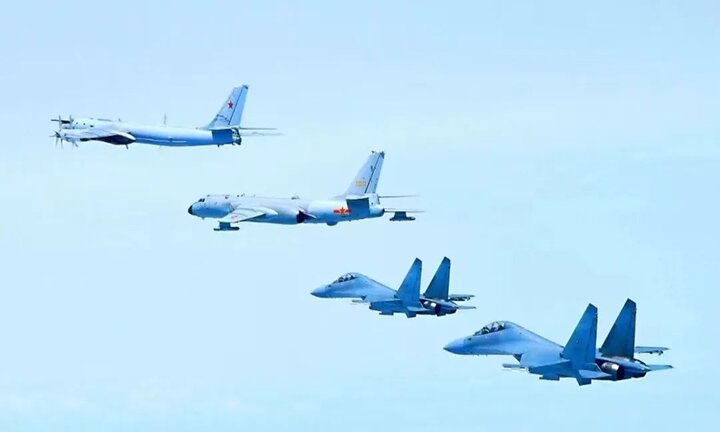

China and Russia Continue Strategic Military Cooperation
The latest patrol marks the 11th joint strategic air exercise conducted by China and Russia.
Chinese state media reported that military aircraft flew across several important maritime regions, including the Sea of Japan, the East China Sea, and sections of the western Pacific Ocean.
The operation followed an annual cooperation plan between the armed forces of both countries and reflected their continuing efforts to improve operational coordination.
Joint Exercises Have Increased in Recent Years
China and Russia have steadily expanded military cooperation over the past decade.
Joint activities now regularly include:
- Strategic bomber patrols
- Naval exercises
- Combined air force operations
- Maritime security drills
- Military training exchanges
These exercises are generally described by both governments as routine defense cooperation rather than preparations for conflict.
Beijing Highlights Regional Stability
China’s Ministry of National Defense stated that the patrol demonstrated the shared determination of both countries to safeguard regional peace and stability.
Officials emphasized that the exercise took place in relevant international airspace and was conducted according to existing military cooperation agreements.
Chinese authorities did not indicate that the mission targeted any specific country or military alliance.
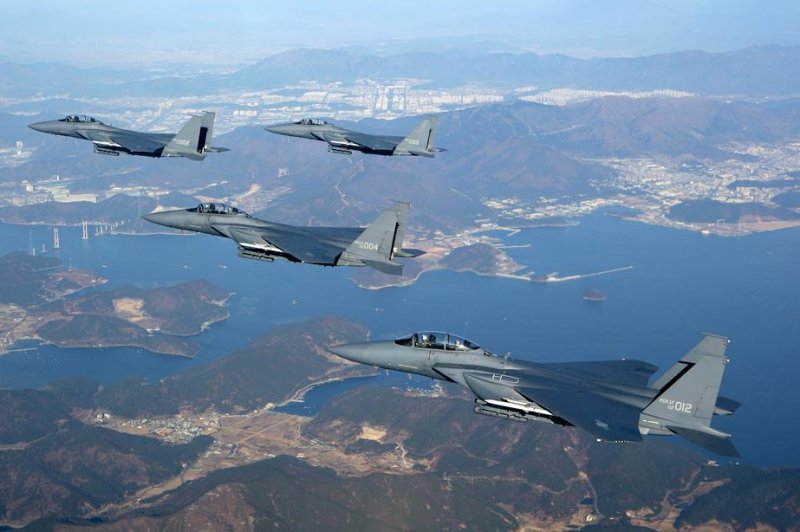

South Korea Responds After Aircraft Enter KADIZ
South Korea’s Joint Chiefs of Staff confirmed that ten Chinese and Russian military aircraft briefly entered the Korea Air Defense Identification Zone during Saturday’s operation.
Although the aircraft remained outside South Korea’s sovereign territorial airspace, the military dispatched Air Force fighter jets to monitor the situation and prepare for any possible developments.
Officials said the deployment followed standard operational procedures whenever unidentified or foreign military aircraft approach the country’s air defense monitoring zone.
Understanding the Korea Air Defense Identification Zone
The Korea Air Defense Identification Zone, commonly known as KADIZ, extends beyond South Korea’s territorial airspace.
Aircraft entering this zone are expected to identify themselves for security monitoring purposes.
Unlike national airspace, an Air Defense Identification Zone is not considered sovereign territory under international law. Entering an ADIZ does not automatically constitute a violation, provided aircraft remain outside territorial airspace.
This distinction explains why South Korean officials confirmed that no breach of national airspace occurred despite deploying fighter aircraft.
Military Monitoring Remains Routine
Military officials noted that Chinese and Russian aircraft remained inside the KADIZ only briefly before continuing their planned route.
No emergency actions beyond routine monitoring were reported.
The South Korean Air Force maintained surveillance until the aircraft exited the identification zone.
Strategic Importance of the Sea of Japan
The China Russia joint air patrol took place over one of East Asia’s most strategically significant maritime regions.
The Sea of Japan connects major shipping routes and lies near several countries with active military forces, making it an area of continued geopolitical importance.
Military exercises conducted in this region often receive close attention from neighboring countries because they involve international airspace near important defense monitoring zones.
Key Reasons the Region Matters
Several factors contribute to the strategic importance of the area:
- International shipping routes
- Major naval operations
- Regional defense cooperation
- Air surveillance activities
- Maritime trade security
Because of these factors, military movements are routinely monitored by governments throughout Northeast Asia.
China and Russia Strengthen Defense Coordination
The growing frequency of joint patrols reflects broader defense cooperation between Beijing and Moscow.
Military collaboration has expanded significantly in recent years across multiple areas, including aviation, naval operations, intelligence coordination, and joint training exercises.
Both governments have repeatedly stated that these activities are intended to improve military interoperability and strengthen strategic partnerships.
Defense analysts note that regular joint patrols also allow participating forces to practice long-range coordination and communication under operational conditions.

No Immediate Response From Beijing or Moscow
Following South Korea’s statement regarding the aircraft entering the KADIZ, neither China nor Russia issued immediate comments addressing Seoul’s assessment.
Chinese officials continued to describe the operation as part of routine military cooperation.
Russian authorities likewise did not provide additional details beyond participation in the scheduled patrol.
The absence of official responses suggests that both countries viewed the exercise as a standard military activity conducted according to existing cooperation plans.
Regional Security Remains Under Close Watch
Military exercises involving major regional powers continue to attract international attention because of their potential implications for regional security.
While joint patrols are not uncommon, neighboring countries typically monitor these operations closely to ensure they do not escalate into unintended incidents.
Defense experts generally agree that maintaining open communication channels between regional militaries helps reduce misunderstandings during such operations.
Confidence-building measures and established military communication mechanisms continue to play an important role in preventing accidental escalation.
Frequently Asked Questions
What was the China Russia joint air patrol?
The China Russia joint air patrol was the 11th strategic military air exercise jointly conducted by Chinese and Russian forces over the Sea of Japan, East China Sea, and western Pacific.
Why did South Korea deploy fighter jets?
South Korea scrambled fighter aircraft after several Chinese and Russian military planes briefly entered the Korea Air Defense Identification Zone as part of the joint patrol.
Did the aircraft violate South Korean airspace?
No. South Korea confirmed that while the aircraft entered the KADIZ, they did not enter the country’s sovereign territorial airspace.
Why are China and Russia conducting joint military patrols?
The two countries say the patrols are part of ongoing military cooperation aimed at improving operational coordination and supporting regional stability through regular joint exercises.
Conclusion
The latest China Russia joint air patrol highlights the continued expansion of military cooperation between Beijing and Moscow while underscoring the strategic importance of Northeast Asia’s airspace. Although South Korea responded by deploying fighter jets after aircraft briefly entered its Air Defense Identification Zone, officials confirmed there was no violation of sovereign airspace. As regional military cooperation and security activities continue to evolve, similar patrols are expected to remain closely monitored by neighboring countries and international observers.
PLEASE CLICK HERE FOR MORE NEWS


