


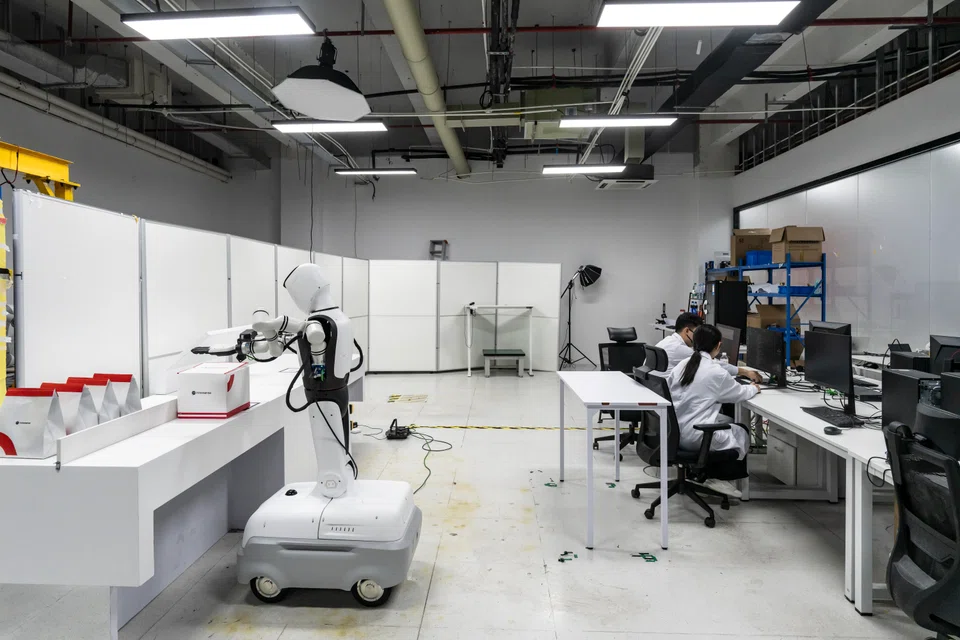
The China AI layoffs adoption trend is becoming increasingly visible as companies across China quietly reduce staff while accelerating the use of artificial intelligence tools. Driven by Beijing’s push for rapid AI integration, firms are attempting to balance productivity gains with concerns over employment stability.
Reports from multiple workers and industry insiders suggest that AI-driven restructuring is already reshaping roles in technology, entertainment, and digital services sectors, with some companies reducing hiring and trimming contractor roles instead of announcing large-scale layoffs.

AI Adoption Driving Silent Workforce Changes in China
The China AI layoffs adoption pattern is emerging as firms integrate AI tools into daily operations, especially in internet and tech companies.
Workers in several industries report that employers are encouraging or requiring the use of AI systems to complete tasks that previously required full teams.
Contractors and Entry-Level Workers Most Affected
In many companies, the initial impact is being felt most by:
- Contract workers
- Graduate trainees
- Entry-level employees
- Temporary project staff
These groups are often reduced first as firms adjust staffing needs based on AI efficiency.
Gradual Workforce Reduction Strategy
Rather than announcing mass layoffs, many firms are reportedly using:
- Reduced contract renewals
- Slower graduate hiring
- Natural attrition
- Internal restructuring
This approach allows companies to avoid regulatory scrutiny and potential social backlash.
Beijing’s Push for AI Expansion Across Industries
A major factor behind the China AI layoffs adoption trend is the government’s broader AI development strategy.
China’s national policy framework encourages companies to adopt artificial intelligence tools to improve productivity and strengthen global competitiveness.
AI Adoption Targets
Government-linked initiatives aim for:
- 70% AI adoption across key industries by 2027
- 90% adoption by 2030
These targets are pushing companies to integrate AI systems quickly, sometimes faster than workforce adjustments can be planned.
Balancing Innovation and Employment Stability
Officials are aware of the risks of rapid automation and the potential impact on jobs.
However, the policy direction continues to prioritize:
- Industrial modernization
- Digital transformation
- AI-driven productivity growth
Workplace Transformation Through AI Tools
The China AI layoffs adoption shift is not only about job cuts but also about how AI is changing daily work routines.
Companies are increasingly embedding AI tools into workflows, including AI agents capable of handling complex tasks.
AI Agents Replacing Routine Tasks
AI systems are now used for:
- Content production
- Marketing workflows
- Customer engagement tasks
- Software development support
Some workers report that tasks once handled by teams are now being managed by AI tools with minimal human supervision.
Tracking Employee AI Usage
In some workplaces, companies are reportedly measuring AI usage as part of performance evaluation.
This includes tracking:
- AI token usage (computing units)
- Frequency of AI tool adoption
- Output efficiency metrics

Concerns Among Employees
Workers have expressed concern that:
- AI usage metrics may not reflect real productivity quality
- Over-reliance on AI could pressure employees to “use AI for the sake of it”
- Performance rankings may be tied to automation adoption rather than skill
Impact on Tech and Creative Industries
The China AI layoffs adoption trend is especially visible in sectors such as technology and entertainment, where automation is rapidly replacing repetitive production tasks.
Tech Industry Restructuring
In large internet and fintech firms:
- Marketing roles are being partially automated
- Front-end tasks are increasingly AI-assisted
- Engineering teams are experiencing gradual headcount reduction
Some companies are reportedly managing workforce changes through gradual downsizing rather than formal layoffs.
Entertainment Sector Disruption
The entertainment industry, particularly micro-drama production, is also undergoing major transformation.
AI tools are being used for:
- Script generation
- Digital actors
- Virtual set creation
This shift has reduced the need for large production teams in some studios.
Job Market Pressures and Youth Employment Concerns
The China AI layoffs adoption trend is unfolding alongside broader economic pressures in the labor market, particularly for young workers entering the workforce.
Rising Competition for Entry-Level Jobs
China faces a large number of new graduates entering the job market annually, leading to:
- Increased competition for fewer roles
- Lower starting salaries in some sectors
- Reduced hiring in traditional entry-level positions
Risk of AI-Driven Job Displacement
Economic research estimates that millions of jobs could be exposed to automation risk, particularly in roles involving:
- Routine digital tasks
- Administrative work
- Basic content production
Younger workers are considered more exposed due to concentration in entry-level and digital roles.
Social Concerns Around AI and Employment
Public discussion around the China AI layoffs adoption trend has grown across social media platforms, where users debate the long-term effects of automation on employment stability.
Growing “AI Anxiety”
Online conversations reflect concerns that:
- AI could replace entire job categories
- Workers may need to continuously reskill
- Career stability could become more uncertain
Government Messaging and Reassurance
State media has attempted to reassure the public that AI is intended to enhance productivity rather than fully replace human labor.
At the same time, policymakers are reportedly studying:
- Workforce transition strategies
- Reskilling programs
- Employment protection measures
Industry Outlook for AI and Employment in China
Analysts suggest that the China AI layoffs adoption trend is part of a broader transformation rather than a temporary disruption.
Gradual but Widespread Transition
Experts expect:
- Slow reduction in certain job categories
- Growth in AI-related roles
- Continued restructuring across major industries
Productivity vs Employment Balance
A key challenge identified by analysts is the gap between:
- Jobs displaced by AI
- New jobs created by AI systems
This imbalance could shape labor market conditions in the coming years.


FAQ
Why are Chinese companies quietly reducing jobs during AI adoption?
Many companies are reducing staff gradually through attrition and contract cuts to avoid regulatory scrutiny while implementing AI tools to improve efficiency.
Which industries are most affected by AI-related job changes in China?
Technology, marketing, and entertainment industries are among the most affected due to high levels of task automation and AI integration.
Is the Chinese government supporting AI adoption despite job concerns?
Yes, China is actively promoting AI adoption to boost productivity, while also monitoring its impact on employment and considering reskilling strategies.
Are AI tools replacing entire jobs in China?
In some cases, AI is replacing specific tasks or reducing team sizes, but most changes involve partial automation rather than full job elimination.
Conclusion
The China AI layoffs adoption trend highlights a major shift in how workplaces are evolving as artificial intelligence becomes deeply integrated into business operations. While companies aim to increase efficiency and meet national AI adoption goals, the transition is also reshaping employment patterns, particularly for younger and entry-level workers. The long-term outcome will depend on how quickly new job opportunities emerge alongside automation-driven displacement.
Click here for news


