 0
0
 0
0
The Brent 2026 oil surplus outlook suggests that current crude prices may be overstating underlying fundamentals. Although Brent crude is trading in the low $70 range, forward projections indicate a softer market structure heading into 2026 and 2027.
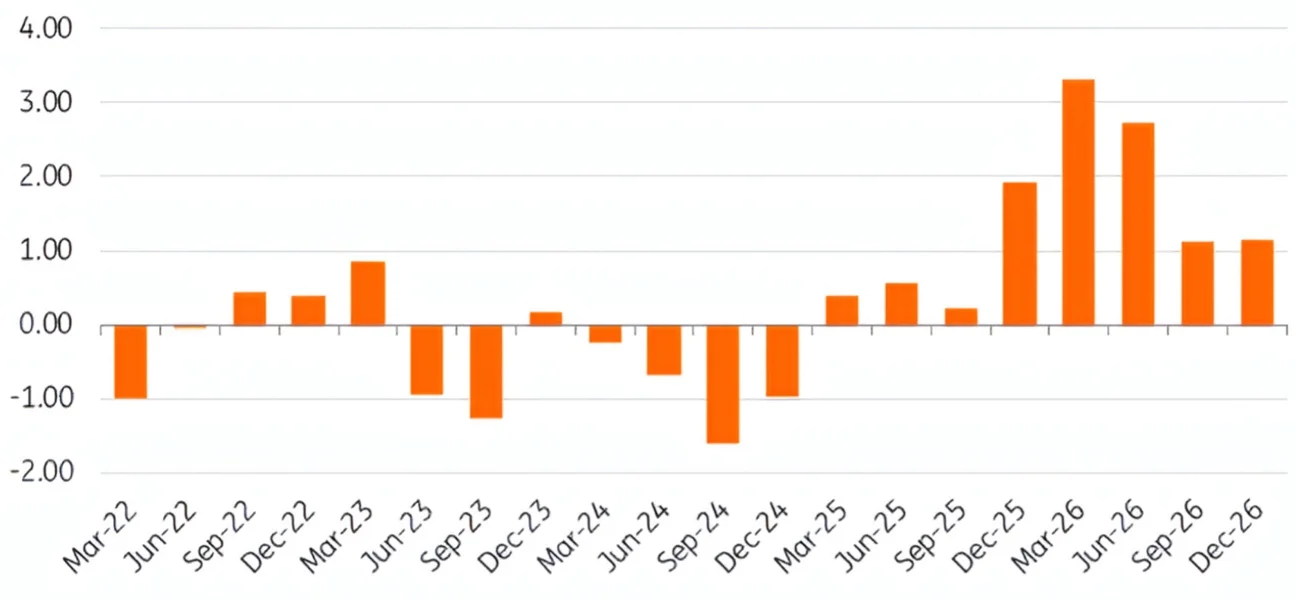
Market analysis shows that while geopolitical tensions continue to support spot prices, supply growth is expected to outpace demand, potentially leading to inventory builds across 2026.

Spot Prices vs Forward Expectations
Brent crude remains supported by short term disruptions and Middle East tensions. However, projections from the U.S. Energy Information Administration indicate that Brent could average closer to $58 in 2026 and around $53 in 2027.
Meanwhile, the International Energy Agency, Organization of the Petroleum Exporting Countries, and the EIA share a common view. Demand growth is expected to continue in 2026 but at a slower pace, while global supply expansion pushes the market into a mild surplus.
This creates the foundation for a potential Brent 2026 oil surplus, even as prompt prices remain elevated.
Supply Growth Outpaces Demand
Demand growth estimates for 2026 range between 0.7 and 1.4 million barrels per day depending on the agency. At the same time, output from OPEC+ producers and non OPEC suppliers, particularly from the Americas, is projected to rise steadily.
This combination could result in modest but persistent inventory builds across 2026 and 2027. Physical indicators such as softer Middle Eastern official selling prices and weaker Dubai benchmarks reflect reduced forward pricing strength.
Despite this, short term supply interruptions and logistical bottlenecks periodically tighten the prompt market. These temporary disruptions support spot pricing without fundamentally altering the broader Brent 2026 oil surplus trajectory.
Geopolitical Premium Supports the Front End
One of the key reasons Brent remains above $70 is geopolitical risk concentrated in the front months of the futures curve.
Tensions around the Strait of Hormuz, which handles more than 20 percent of global oil flows, periodically inject risk premium into Brent spreads. Similarly, instability near the Bab el-Mandeb has forced vessel rerouting and raised shipping insurance costs.
These disruptions increase transit risk and inflate spot prices. However, they do not necessarily remove large volumes of oil from global supply for extended periods. As a result, the back end of the curve remains relatively anchored.
The ongoing war between Russia and Ukraine also continues to influence export routes and grade differentials. While markets have largely adjusted to sanctions and discount structures, infrastructure risks in the Black Sea region still create temporary volatility.
China as the Surplus Absorber
China plays a crucial role in balancing global flows. As the largest importer of crude oil, it often absorbs surplus barrels when prices are attractive.
Opportunistic stockbuilding by Chinese refiners can temporarily mask visible inventory accumulation elsewhere. However, this mechanism smooths volatility rather than eliminating oversupply. If refining demand weakens, surplus barrels could quickly reappear in global storage data.
Macro Factors Less Dominant
A softer U.S. dollar and stable interest rate expectations have provided limited support to oil prices. However, unlike previous cycles, macroeconomic factors are not the primary driver of pricing in 2026.
Instead, the market narrative is shaped by physical balances versus episodic geopolitical shocks.
2026 Base Case and Risk Scenarios
The base case for the Brent 2026 oil surplus includes:
-
Supply growth exceeding demand growth
-
Gradual inventory builds
-
Softening time spreads
-
Brent drifting toward the high $50s to low $60s
Upside risks include a material disruption in the Strait of Hormuz or coordinated production cuts from OPEC+. Stronger than expected Asian demand could also support higher prices.
Downside risks include weaker global growth, supply discipline slippage, or faster demand erosion from electric vehicle adoption and efficiency gains.
Market Strategy: Focus on the Curve
Market participants may find better signals in time spreads rather than flat price direction alone. Monitoring regional price differentials and official selling price adjustments can provide early warning signs of physical stress.
Geopolitical risks should be viewed as volatility events unless they remove supply in a sustained manner.
Conclusion
The Brent 2026 oil surplus narrative suggests that current prices in the low $70 range reflect geopolitical risk premium more than tight fundamentals. Structurally, supply growth and moderating demand point toward softer balances.
However, fragile transit routes and recurring regional tensions ensure continued volatility.
In summary, the oil market in 2026 appears well supplied, with modest demand growth and elevated geopolitical risk. Brent may remain volatile, but the underlying balance suggests downward pressure over the medium term.
PLEASE CLICK HERE FOR MORE NEWS