 1
1
 0
0
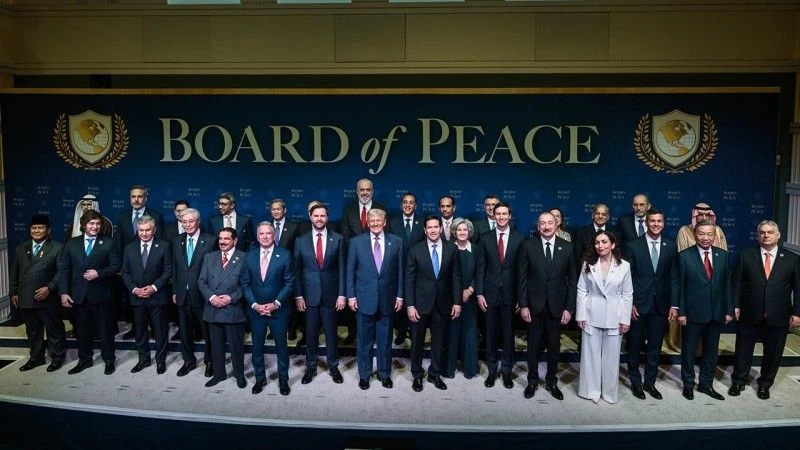
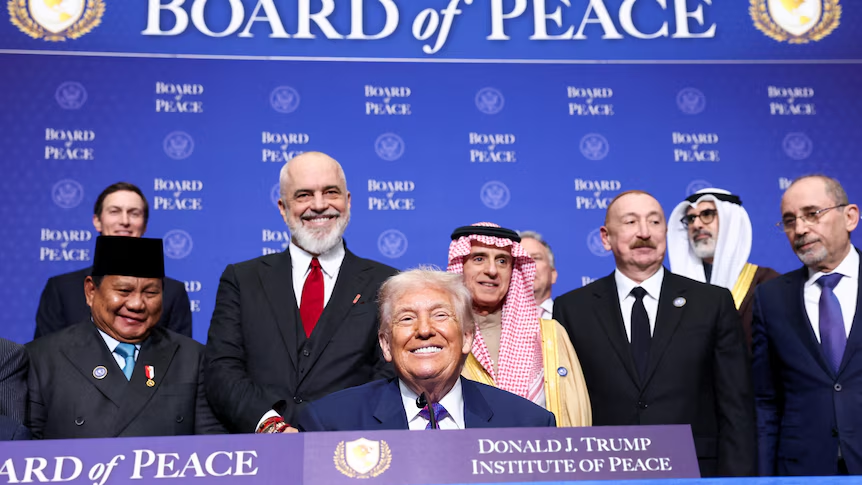
Board of Peace Meeting Washington took place on February 19 in Washington, marking the first official gathering of the newly established international body. Representatives from 49 countries attended the meeting, which focused on rebuilding the Gaza Strip, coordinating humanitarian assistance, and establishing a new security framework for the region.
The session represented the formal launch of the Board of Peace, an initiative linked to Donald Trump, and aimed at mobilizing international cooperation around post conflict recovery in Gaza. Delegates discussed financial commitments, security coordination, and operational structures needed to support reconstruction efforts.
Countries Represented at the First Board of Peace Session
According to information released after the meeting, 49 countries participated in the inaugural session, with varying levels of involvement. Several nations were represented at the level of heads of state or government, including Argentina, Indonesia, Romania, Uzbekistan, Kazakhstan, Vietnam, Pakistan, Hungary, Cambodia, Egypt, Armenia, and Albania.
Between 26 and 27 countries joined as formal members of the Board of Peace. These included Argentina, Egypt, Indonesia, Israel, Pakistan, and Turkey. Among European Union member states, only Hungary and Bulgaria participated as full members, while most other EU countries attended in observer roles.
Notably absent from the meeting were several major global powers. Russia, China, and France did not attend the session. Belarus was also missing, despite reportedly accepting the invitation, due to visa related issues that prevented entry into the United States.
Gaza Reconstruction Funding Announced
A major outcome of the Board of Peace Meeting Washington was the announcement of substantial financial commitments toward rebuilding the Gaza Strip. Officials confirmed that USD 7 billion had already been raised before the meeting.
During the session, the United States pledged an additional USD 10 billion. The United Arab Emirates committed USD 1.2 billion, while Saudi Arabia and Kuwait each pledged USD 1 billion.
The funds are expected to support housing reconstruction, infrastructure repair, restoration of public services, and broader economic recovery efforts. The pledges signal a coordinated international attempt to address the scale of damage in Gaza.
Recruitment of Palestinian Police Forces
Another significant development from the meeting was the launch of a recruitment initiative for Palestinian police forces. Officials reported that approximately 2,000 applications were submitted within the first few hours of the announcement.
The recruitment program is designed to strengthen local security capacity and help maintain public order during the reconstruction phase. Establishing effective local policing is seen as a critical step toward long term stability and governance.
International Security Deployment Plans
Beyond local policing, several countries expressed readiness to contribute personnel to an international security framework in Gaza.
Indonesia confirmed plans to deploy at least 8,000 soldiers as part of international security operations. Kazakhstan announced its willingness to send military personnel, while Morocco indicated that it is prepared to contribute police officers.
These international deployments are intended to provide stability during reconstruction, support local authorities, and ensure coordination between international partners and Palestinian institutions.
Political Context and International Reactions
The establishment of the Board of Peace has generated mixed reactions among analysts and policymakers. Some observers describe the body as a temporary initiative closely tied to the current US political landscape. Others have raised questions about its long term institutional backing and governance structure.
Critics have also pointed to the limited operational details released during the meeting, expressing concern about implementation timelines and oversight mechanisms. Despite these concerns, the broad attendance suggests that the initiative has drawn significant international attention.
Relationship With the United Nations
There has been speculation about how the Board of Peace may interact with the United Nations. At this stage, experts caution against viewing the Board as a replacement for existing international institutions.
Instead, it may function as an additional platform for dialogue, coordination, and funding, potentially complementing established UN mechanisms while providing space for broader international participation.
What Comes Next for the Board of Peace
The long term impact of the Board of Peace Meeting Washington will depend on how effectively pledged funds are distributed and how quickly security arrangements are implemented. Transparency, coordination among participating nations, and measurable reconstruction progress will be key to determining the initiative’s credibility.
For now, the inaugural session represents a notable diplomatic development focused on Gaza reconstruction and regional stability, with global attention shifting toward practical implementation in the months ahead.