 0
0
 0
0
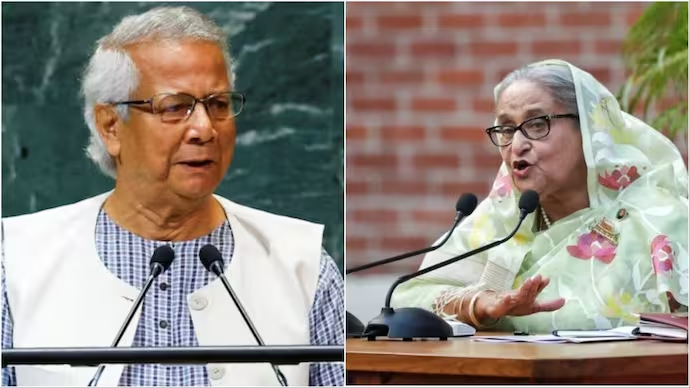
The Government of Bangladesh has expressed strong objections after former Prime Minister Sheikh Hasina addressed a public event in New Delhi on January 23. Dhaka described the remarks as a threat to the country’s peace, security, and democratic process.

In an official statement, Bangladesh said it was “surprised and shocked” that India allowed Hasina, whom the government claims has been convicted by the International Crimes Tribunal for crimes against humanity, to speak at the event. The statement accused her of calling for the removal of the Bangladeshi government and urging supporters to carry out acts that could disrupt the upcoming general elections.
Bangladesh also criticized India for not extraditing Hasina despite repeated requests under the bilateral extradition agreement. Allowing her to speak on Indian soil, the statement said, “endangers Bangladesh’s democratic transition and peace and security.”
The press release labeled Hasina’s speech as “inciteful pronouncements” and a violation of norms for inter-state relations, including respect for sovereignty, non-interference, and good neighbourliness. It warned that the event could set a “dangerous precedent” for future Bangladesh–India relations and affect the ability of the next elected government to maintain bilateral cooperation.
The government also targeted Hasina’s political party, the Awami League, saying the speech reinforced the interim government’s decision to ban its activities. Bangladesh stated it would hold the party accountable for any violence or unrest during the elections and take steps to prevent threats to national security.
The statement concluded by reiterating Bangladesh’s concern over India’s refusal to extradite Hasina and warned that her public address in Delhi posed a serious risk to the nation’s peace and democratic transition.