 0
0
 0
0
Arik Air engine blast Benin diversion 2026 has been identified as the key finding in a preliminary aviation investigation involving a passenger aircraft operated by Arik Air. The Nigerian Safety Investigation Bureau (NSIB) confirmed that an engine failure occurred during a scheduled domestic flight in February 2026.
According to the investigation, the incident involved a Boeing 737-700 aircraft with registration number 5N-MJF. The aircraft was operating a passenger flight from Murtala Muhammed International Airport, Lagos, to Obafemi Jeremiah Awolowo International Airport, Port Harcourt.
During the flight, the crew reported a loud explosion-like sound followed by abnormal vibrations from the aircraft’s left engine, prompting emergency procedures and a diversion to Benin Airport.
Details of the Engine Failure Incident
The Arik Air engine blast Benin diversion 2026 incident occurred on February 11, 2026, while the aircraft was cruising at high altitude.
The NSIB preliminary report stated that the flight crew suddenly heard:
-
A loud bang
-
Grinding mechanical noises
-
Strong vibrations from the No. 1 engine
These symptoms suggested a serious engine malfunction that required immediate response from the pilots.
Aircraft Climbing Phase When Incident Happened
According to the report, the aircraft was climbing between Flight Level 260 and Flight Level 270, which corresponds to an altitude of roughly 26,000 to 27,000 feet.
At that time:
-
The first officer was operating the aircraft as the pilot flying
-
The captain was serving as the pilot monitoring
Shortly after the abnormal sound was detected, the pilots began standard emergency procedures to manage the situation safely.
Missing Fan Blade Identified After Landing
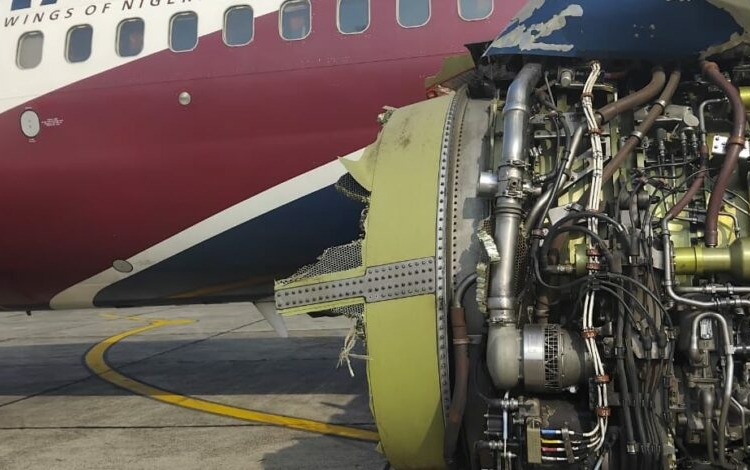
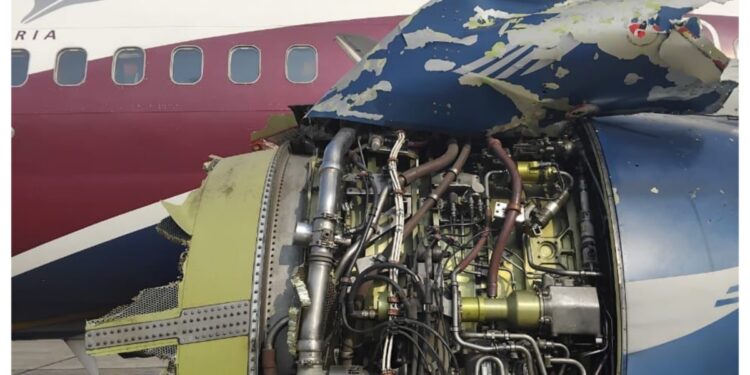
Investigators later confirmed that Fan Blade No. 6 from the No. 1 engine was missing.
This discovery was made after the aircraft safely landed in Benin City, where engineers conducted an inspection.
Fan blades are critical components inside jet engines that help compress incoming air for combustion. Damage or detachment of these blades can cause severe vibrations and loud noises.
Emergency MAYDAY Call and Diversion
Once the abnormal engine event was detected, the flight crew immediately declared a MAYDAY emergency call to air traffic control.
Declaring MAYDAY signals a life-threatening situation that requires immediate priority assistance from aviation authorities.
Steps Taken by the Flight Crew
After the engine blast symptoms were detected, the crew carried out several emergency actions:
-
Declared MAYDAY to air traffic control (ATC)
-
Initiated emergency engine procedures
-
Reduced engine power and stabilized the aircraft
-
Diverted to the nearest suitable airport
The closest safe airport available was Benin Airport, located in Edo State.
The aircraft landed safely, preventing the situation from escalating further.
Importance of Immediate Diversion
Aviation safety experts say diversions are a critical response when engine failures occur mid-flight.
Pilots are trained to prioritize:
-
Passenger safety
-
Aircraft stability
-
Quick access to the nearest safe runway
In this case, the diversion to Benin City allowed the aircraft to land within a relatively short time after the malfunction occurred.
Role of the Nigerian Safety Investigation Bureau
The investigation into the Arik Air engine blast Benin diversion 2026 incident is being conducted by the Nigerian Safety Investigation Bureau.
The agency is responsible for investigating transportation accidents across Nigeria, including aviation, maritime, rail, and road incidents.
Purpose of Preliminary Investigation Reports
The report released by the NSIB is a preliminary investigation, meaning the analysis is still ongoing.
Preliminary reports typically:
-
Present early findings
-
Identify possible technical factors
-
Outline events leading to the incident
However, they do not assign blame or determine final causes.
Further technical analysis will continue before a final report is issued.
Official Statement From NSIB
The report was communicated through a statement from Funke Arowojobe, director of public affairs and family assistance at the agency.
According to the statement, the flight crew reported an abnormal engine event during the climb phase of the flight.
This prompted the emergency response procedures that eventually led to the safe diversion and landing in Benin.
Understanding Jet Engine Fan Blade Failures
The Arik Air engine blast Benin diversion 2026 highlights a type of aviation incident known as fan blade failure.
What Causes Fan Blade Failures?
Fan blade damage can occur due to several reasons:
-
Metal fatigue over time
-
Manufacturing defects
-
Foreign object damage (FOD)
-
Bird strikes during flight
When a fan blade detaches or breaks, the engine can experience severe imbalance.
This imbalance often causes:
-
Loud bangs or explosions
-
Intense vibrations
-
Reduced engine performance
Safety Systems Designed to Protect Aircraft
Modern jet engines are designed with containment systems to prevent broken components from escaping the engine casing.
These safety features help ensure that:
-
Debris remains inside the engine
-
Aircraft structure remains protected
-
Pilots have time to respond safely
Such systems likely played an important role in preventing a more serious outcome during the incident.
Aviation Safety and Emergency Procedures
Airlines and aviation regulators maintain strict safety procedures for situations involving engine malfunctions.
Pilot Training for Engine Failure
Commercial airline pilots undergo extensive simulator training that includes scenarios such as:
-
Engine failure during takeoff
-
Engine fires or explosions
-
Loss of engine power during flight
These simulations prepare crews to respond calmly and effectively during real incidents.
Aircraft Designed to Fly With One Engine
Aircraft like the Boeing 737-700 are designed to continue flying safely even if one engine fails.
This capability allows pilots to:
-
Stabilize the aircraft
-
Reduce altitude if needed
-
Divert to a nearby airport
The safe landing in Benin demonstrates how these design features and training procedures work together.
What Happens Next in the Investigation
The investigation into the Arik Air engine blast Benin diversion 2026 will continue in the coming months.
Investigators may examine:
-
Engine maintenance records
-
Flight data recorder information
-
Cockpit voice recordings
-
Physical inspection of damaged engine parts
These steps will help determine the precise technical cause of the fan blade failure.
A final report from the NSIB will likely include safety recommendations aimed at preventing similar incidents in the future.
FAQ
What caused the Arik Air engine blast in 2026?
The preliminary report indicates that a missing fan blade in the No. 1 engine triggered the abnormal engine event during the flight.
Where did the Arik Air aircraft make its emergency landing?
The aircraft diverted and landed safely at Benin Airport in Edo State after declaring a MAYDAY emergency.
What type of aircraft was involved in the incident?
The aircraft involved was a Boeing 737-700, registered as 5N-MJF, operated by Arik Air.
Did passengers survive the Arik Air engine failure incident?
The aircraft landed safely after the diversion, and the crew successfully managed the emergency situation.
Conclusion
The Arik Air engine blast Benin diversion 2026 incident highlights the importance of rapid response procedures and aviation safety systems when technical problems occur during flight. While the preliminary report points to a missing engine fan blade as the trigger for the abnormal event, investigators will continue examining technical data and aircraft components to determine the exact cause. The final investigation report is expected to provide deeper insights and safety recommendations for Nigeria’s aviation industry
Click here for more news