 0
0
 0
0
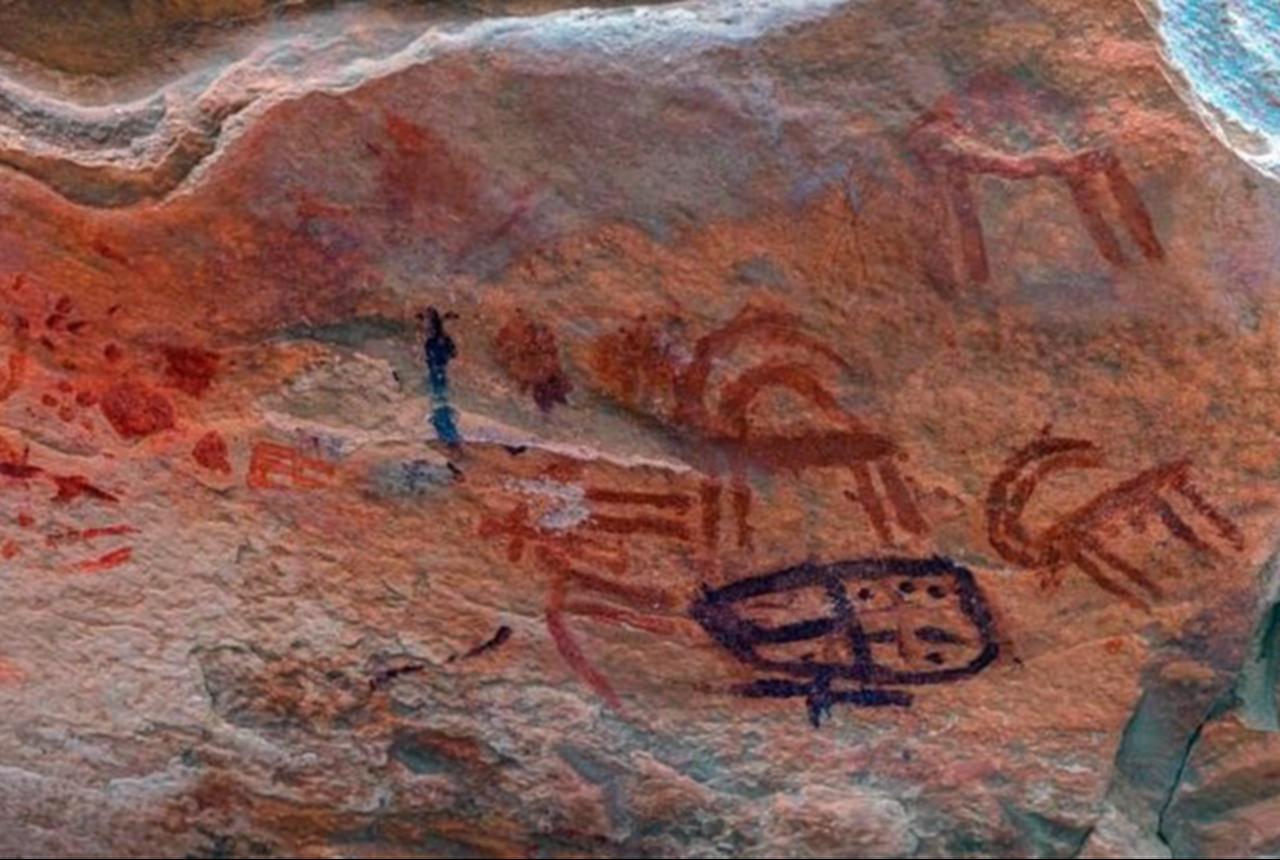
Ancient Sinai rock art has been uncovered by Egyptian archaeologists in the southern desert region, revealing engravings and drawings that span nearly 10000 years of human history. The discovery offers new insights into early human activity, cultural practices, and environmental changes in the region.
The findings were announced by the Egyptian Tourism and Antiquities Ministry, which described the discovery as an important contribution to the understanding of prehistoric life in Egypt’s desert landscapes.
Discovery of ancient rock art in southern Sinai
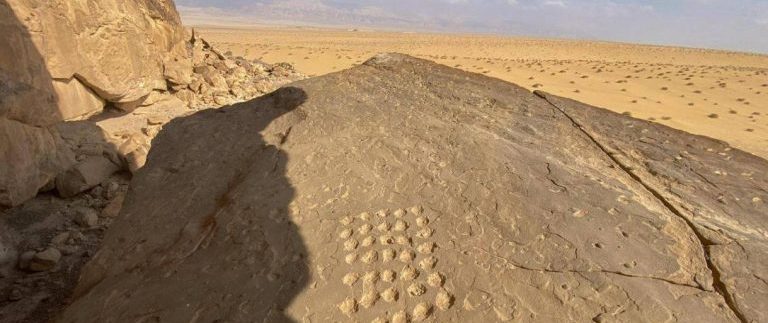
Archaeologists discovered the rock art shelter on the Umm Arak Plateau during an ongoing mission to document and survey ancient inscriptions across the Sinai Peninsula. The site contains multiple groups of engravings and drawings created over thousands of years.
According to the ministry, researchers identified different artistic phases within the site. The earliest drawings were made using red pigment and date back between 10000 and 5500 BCE. These early images represent some of the oldest artistic expressions ever recorded in the region.
Officials stated that the discovery highlights the Sinai desert’s role as an important cultural and historical crossroads connecting Africa and Asia.
Dating the drawings and artistic features
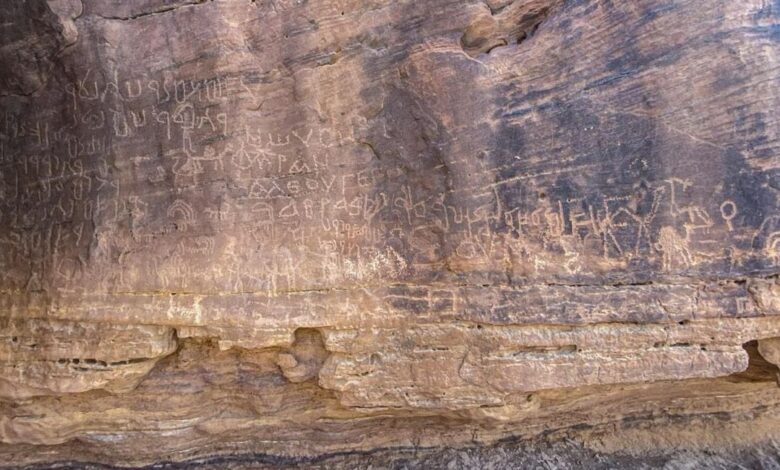
Initial analysis of the ancient Sinai rock art shows that the images were produced using natural pigments and engraving techniques that evolved over time. The oldest drawings, created with red pigment, are believed to represent early symbolic and cultural expressions of prehistoric communities.
Researchers observed that the artworks are divided into several chronological groups. Each group reflects different styles, tools, and themes, suggesting that the shelter was used by successive populations over millennia.
Experts believe the variations in artistic methods provide valuable evidence about how human societies adapted to environmental changes, migration patterns, and cultural development in the region.
Local guidance led to the archaeological find
The site was located with the help of Sheikh Rabie Barakat, a resident of the nearby Serabit el-Khadim area, who guided researchers to the location.
According to Mohamed Abdel Badie, Head of the Egyptian Antiquities Sector, local knowledge played a crucial role in identifying the shelter. He noted that cooperation between archaeologists and local communities continues to support efforts to uncover and preserve Egypt’s ancient heritage.
The ministry emphasized that such partnerships help researchers locate remote sites that might otherwise remain undocumented.
Historical importance of the discovery
Experts say the ancient Sinai rock art provides valuable information about prehistoric human life in desert environments. The drawings may depict aspects of daily activities, beliefs, or interactions with the natural world, although detailed interpretations are still ongoing.
The discovery contributes to a growing body of archaeological evidence showing that the Sinai region supported human populations for thousands of years. It also highlights the importance of preserving desert archaeological sites that face threats from natural erosion and human activity.
Researchers believe further study of the engravings could reveal more about early settlement patterns, trade routes, and cultural exchanges between ancient communities.
Ongoing research and documentation efforts
The Egyptian Tourism and Antiquities Ministry confirmed that archaeological teams will continue to examine the site to better understand the meaning and timeline of the artworks. Documentation and preservation efforts are underway to protect the drawings and make them available for future research.
Officials said the findings strengthen Egypt’s global reputation as a center of archaeological discovery and underline the importance of protecting historical heritage sites.
Further scientific analysis is expected to provide deeper insight into the materials used, the techniques applied, and the cultural significance of the images.
Significance for global archaeology
The discovery of ancient Sinai rock art represents a major step in understanding early artistic traditions and human development in desert regions. By studying these drawings, researchers can better trace how early societies expressed identity, communicated ideas, and adapted to challenging environments.
Archaeologists say the findings demonstrate that desert regions like southern Sinai were not isolated landscapes but active centers of human activity and cultural exchange over thousands of years.
As research continues, the newly discovered rock art shelter is expected to offer important clues about prehistoric civilizations and the evolution of human creativity.
For More news, please visit our homepage