

 0
0
 0
0
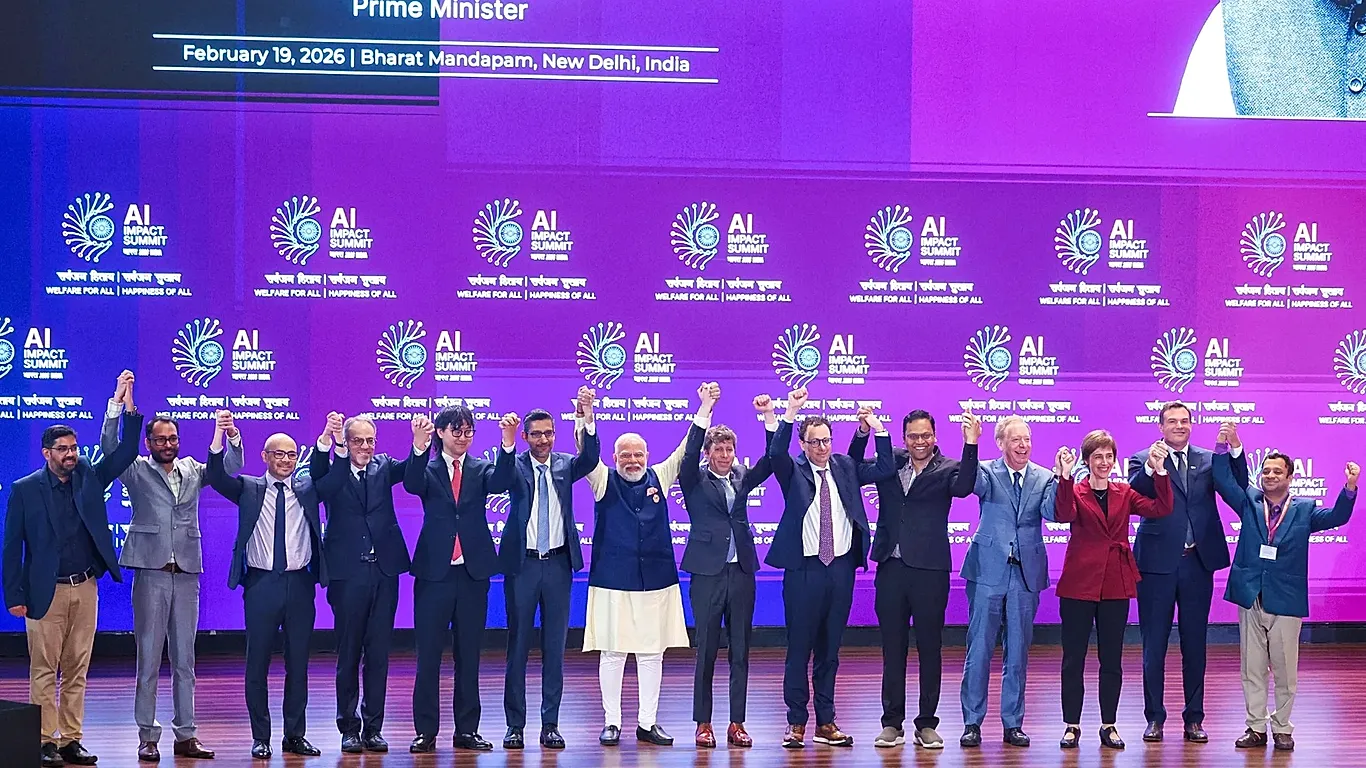
AI India Summit discussions concluded in New Delhi with world leaders outlining a joint approach to artificial intelligence governance, as calls for urgent regulation intensified during the final day of meetings.
The five day gathering brought together dozens of heads of state, ministers, technology executives, and policy experts to examine the risks and opportunities presented by rapidly advancing AI systems. The event marked the fourth annual global summit dedicated to artificial intelligence governance and the first hosted by a developing nation.
Officials say the summit focused on building shared principles for responsible AI development while balancing innovation and oversight.

Global Leaders Present Joint AI Framework
At the close of the AI India Summit, participating nations were expected to present a coordinated stance on how artificial intelligence should be governed globally.
While detailed policy commitments were not immediately released, the emphasis centered on establishing common standards, defining acceptable risk thresholds, and improving international cooperation.
Policy experts noted that global governance often begins with shared terminology and agreement on potential dangers before binding regulation follows.
The summit’s broad scope included topics such as ethical AI deployment, data security, workforce disruption, online abuse prevention, and environmental sustainability linked to energy intensive data centers.
Sam Altman Calls Regulation Urgent
OpenAI Chief Executive Officer Sam Altman told participants that regulation of artificial intelligence is urgent due to the technology’s rapid evolution and growing societal impact.
Altman acknowledged that powerful AI systems require safeguards similar to those placed on other transformative technologies. However, he also cautioned that overly restrictive regulation could hinder innovation and competitiveness.
He warned that centralization of AI technology within a single company or country could create long term risks. At the same time, he emphasized that some degree of oversight is clearly necessary.
Altman’s comments reflect ongoing global debate over how to balance economic growth driven by AI with safety and ethical considerations.
India Positions Itself as a Key AI Player
The AI India Summit was the largest gathering of its kind so far and represented a strategic opportunity for India to highlight its ambitions in artificial intelligence development.
Indian Prime Minister Narendra Modi stated that AI must serve the global common good, emphasizing cooperation between human expertise and intelligent systems.
India aims to attract more than 200 billion dollars in AI related investments over the next two years. During the summit, several major United States technology firms announced new infrastructure projects and partnership agreements in the country.
By hosting the summit, India signaled its intent to become a central hub in the global AI ecosystem, competing alongside the United States and China.
Economic Growth Versus Social Concerns
The rapid growth of generative AI tools has significantly boosted profits for technology companies. At the same time, the expansion of AI systems has raised concerns about job displacement, misinformation, and data privacy.
Experts at the AI India Summit highlighted the potential for automation to reshape labor markets across industries. While AI can increase productivity, it may also require large scale workforce retraining.
Another major issue discussed was the environmental impact of AI infrastructure. Data centers powering AI applications consume substantial electricity, prompting calls for more energy efficient systems and sustainable development practices.
International observers argue that coordinated global standards could help mitigate unintended consequences while preserving innovation.
The Push for Global Governance
United Nations Secretary General Antonio Guterres called for stronger international cooperation in AI governance. He urged technology leaders to contribute to a global fund aimed at improving AI skills and expanding access to computing power worldwide.
The proposed fund, estimated at three billion dollars, would support developing countries seeking to build AI capacity and prevent technological inequality.
Guterres stressed that decisions about the future of artificial intelligence should not be limited to a small group of countries or corporations. His remarks underscored concerns about concentration of technological power.
Governance discussions at the summit also included child protection measures, safeguards against online abuse, and mechanisms to prevent misuse of AI tools.
Lessons From Previous AI Summits
The AI India Summit follows earlier gatherings in France, South Korea, and the United Kingdom. While those meetings produced general commitments to responsible development, critics noted that concrete enforcement mechanisms were limited.
Analysts say this year’s summit aimed to move beyond broad statements toward clearer coordination.
However, experts caution that achieving binding global agreements remains complex. Countries vary widely in regulatory philosophy, economic priorities, and security considerations.
Even so, participants emphasized that dialogue and shared frameworks represent necessary first steps.
Balancing Innovation and Regulation
One of the central themes of the AI India Summit was how to regulate artificial intelligence without stifling growth.
Industry leaders argue that excessive regulation could slow innovation and weaken competitiveness. Policymakers counter that insufficient oversight may increase risks related to misinformation, security breaches, and ethical violations.
The debate reflects a broader tension seen in other transformative technologies, including biotechnology and nuclear energy.
As AI capabilities expand, governments worldwide are racing to craft regulatory models that protect citizens while encouraging research and investment.
What Comes Next After the AI India Summit
Although the summit concluded with calls for coordinated governance, implementation will depend on national legislation and multilateral cooperation.
Countries are expected to continue bilateral and regional discussions to refine standards and oversight mechanisms. Future summits may provide updates on progress and compliance.
The AI India Summit demonstrated that artificial intelligence governance has become a central issue in global diplomacy. As AI systems become more integrated into daily life, international coordination is likely to remain a priority.
Key Takeaways From the AI India Summit
-
World leaders presented a shared approach to AI governance
-
Sam Altman emphasized urgent need for regulation
-
India positioned itself as a major AI investment destination
-
Concerns include job disruption, misinformation, and energy demand
-
Calls for global cooperation and equitable AI access intensified
The AI India Summit marks a significant moment in the evolving global conversation about artificial intelligence regulation. With innovation accelerating and risks becoming more complex, governments and industry leaders face mounting pressure to develop balanced and effective oversight frameworks.
For more news, Please visit our Homepage





[…] AI India Summit Delivers Critical Global Approach as Leaders Call for Urgent Regulation 3 […]