0
0
 0
0
South Australia election 2026 Labor landslide has reshaped the state’s political landscape, with a decisive victory for Labor and a significant decline for the Liberal Party.
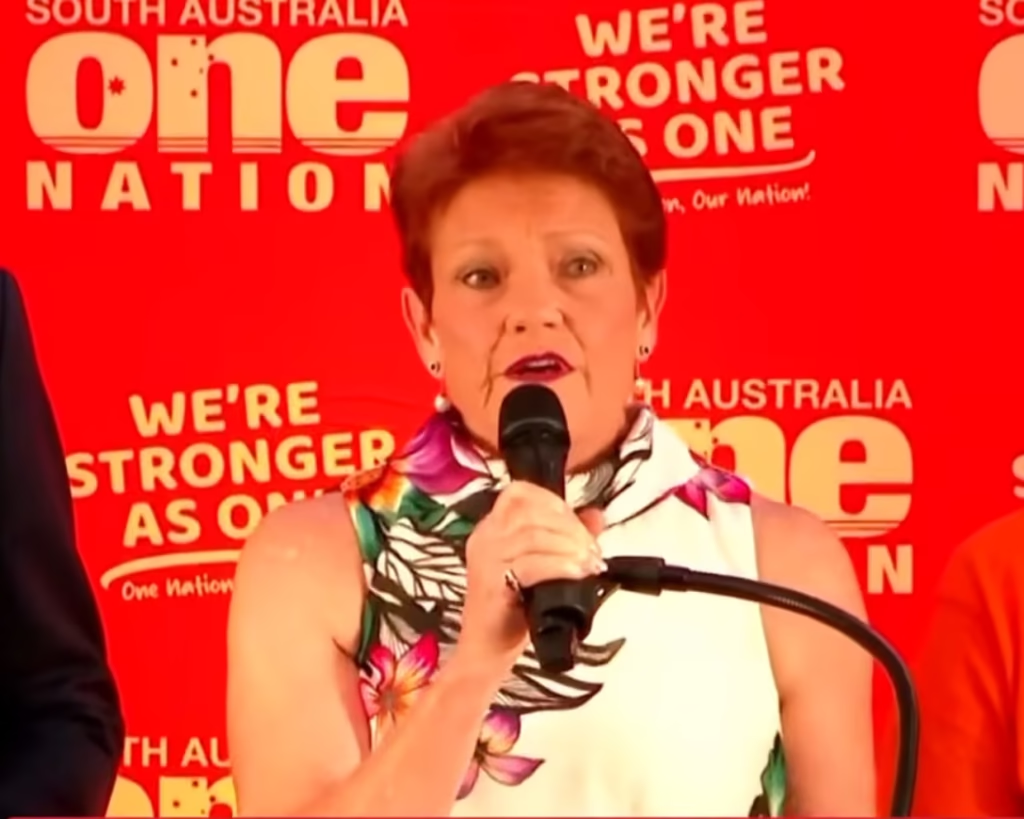
Labor Secures Strong Victory Under Malinauskas
Peter Malinauskas led the Australian Labor Party to a commanding win in the state election, with early results indicating a near-total dominance across key seats.
The outcome suggests:
- A major expansion of Labor’s parliamentary majority
- Gains in both metropolitan and regional constituencies
- A continuation of Malinauskas’ leadership into the next term
Key Highlights of Labor’s Win
- Several traditionally Liberal-held seats flipped to Labor
- Strong performance in urban electorates
- New candidates emerging in previously contested areas
Changing Electoral Landscape
The South Australia election 2026 Labor landslide reflects shifting voter sentiment, with significant changes in voting patterns across the state.
Liberal Party Suffers Heavy Losses
The Liberal Party of Australia experienced one of its most difficult election nights in recent history.
Reaction from Opposition Leader
Ashton Hurn acknowledged the scale of the defeat:
- Described it as a “tough night”
- Emphasized resilience and future rebuilding
- Confirmed commitment to party leadership moving forward
Seat Losses and Decline
- Multiple safe seats lost
- Metropolitan representation reduced significantly
- Some projections suggested only one metro seat retained
Notably, former leader Vincent Tarzia lost the seat of Hartley, highlighting the scale of the shift.
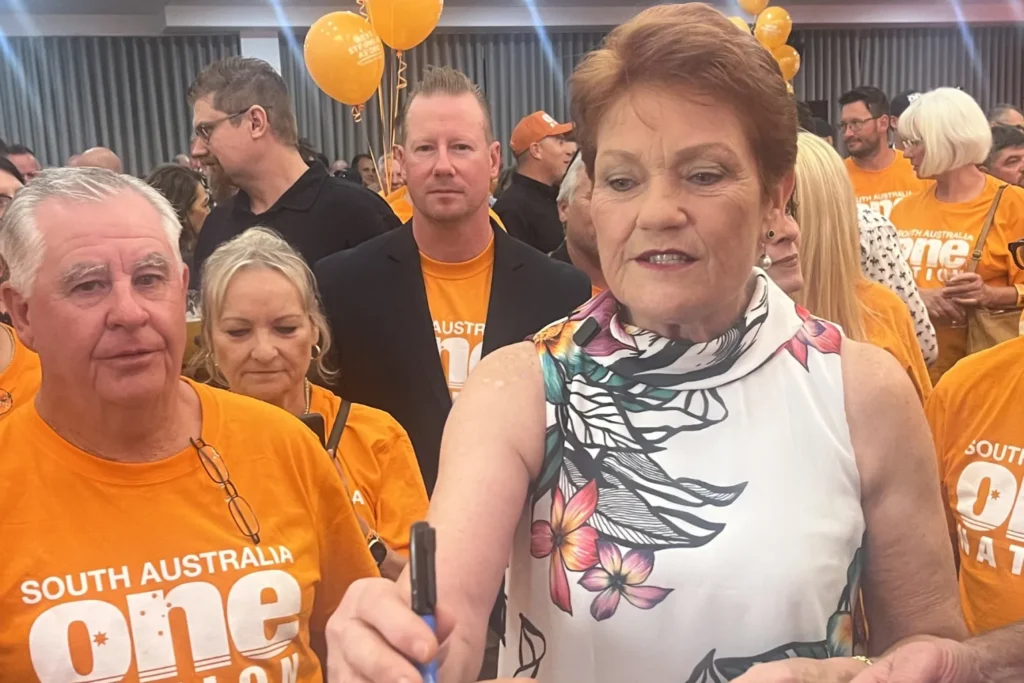
Rise of One Nation Disrupts Two-Party System
A key feature of the South Australia election 2026 Labor landslide is the surge in support for One Nation.
Growing Support for Minor Parties
- Increased vote share in regional areas
- Competitive performance in traditionally safe seats
- Potential seat gains from Liberal strongholds
Role of Pauline Hanson
The federal leader of One Nation attended celebrations as early results showed:
- Strong voter backing for the party
- Influence in reshaping electoral competition
- Potential long-term impact on voting trends
Impact on Two-Party Dominance
The surge indicates:
- Voter dissatisfaction with major parties
- Erosion of traditional Labor vs Liberal competition
- Greater role for minor parties in future elections
Key Seat Changes and Notable Outcomes
Several individual races highlighted the broader trend of the South Australia election 2026 Labor landslide.
Major Seat Flips
- Hartley shifted from Liberal to Labor
- Unley won by Labor for the first time in over three decades
- Colton expected to go to Labor candidate Aria Bolkus
Close Contests
- Flinders retained by Liberal candidate Sam Telfer
- Chaffey at risk of shifting to One Nation
- Bragg likely the only metropolitan Liberal seat
Emerging Candidates
New faces are set to enter parliament, reflecting a generational shift within Labor ranks.
Internal Reactions Within Labor
Senior Labor figures expressed optimism following the results.
Statement from Deputy Leadership
Kyam Maher highlighted:
- Excitement about new members joining the party
- Anticipation of policy continuity
- Confidence in the government’s direction
Strengthening Party Structure
- Fresh candidates entering parliament
- Expanded majority enabling legislative agenda
- Reinforced leadership under Malinauskas
Broader Political Implications
The South Australia election 2026 Labor landslide may have effects beyond the state.
National-Level Impact
- Signals changing voter attitudes across Australia
- Raises questions about Liberal Party strategy
- Highlights growing support for alternative parties
Economic and Policy Considerations
Polling prior to the election showed:
- Labor leading significantly in voter support
- Liberal vote share dropping to historically low levels
- One Nation gaining traction among disaffected voters
These trends suggest deeper shifts in political alignment.
Factors Behind the Election Outcome
Several elements contributed to the South Australia election 2026 Labor landslide.
Voter Sentiment
- Dissatisfaction with traditional party options
- Desire for stability or policy continuity
- Reaction to local and national political issues
Campaign Dynamics
- Strong grassroots mobilization by Labor
- Fragmentation of opposition votes
- Increased visibility of minor parties
Long-Term Trends
- Declining loyalty to major parties
- Rise of issue-based voting
- Changing demographics in key electorates
FAQ Section
Who won the South Australia election 2026?
Labor, led by Peter Malinauskas, secured a decisive victory with a large majority.
Why did the Liberal Party lose so heavily?
Factors include declining voter support, strong competition from Labor, and a surge in minor party votes.
What role did One Nation play in the election?
One Nation significantly increased its vote share, disrupting traditional two-party competition.
Will this result affect national politics in Australia?
It may influence broader political strategies and highlight shifting voter behavior across the country.
Conclusion
The South Australia election 2026 Labor landslide marks a significant turning point in the state’s political history. With Labor strengthening its hold, the Liberal Party facing major setbacks, and One Nation reshaping the electoral landscape, the results reflect evolving voter priorities and a changing political environment that could have lasting implications.
PLEASE CLICK HERE FOR MORE NEWS