 0
0
 0
0
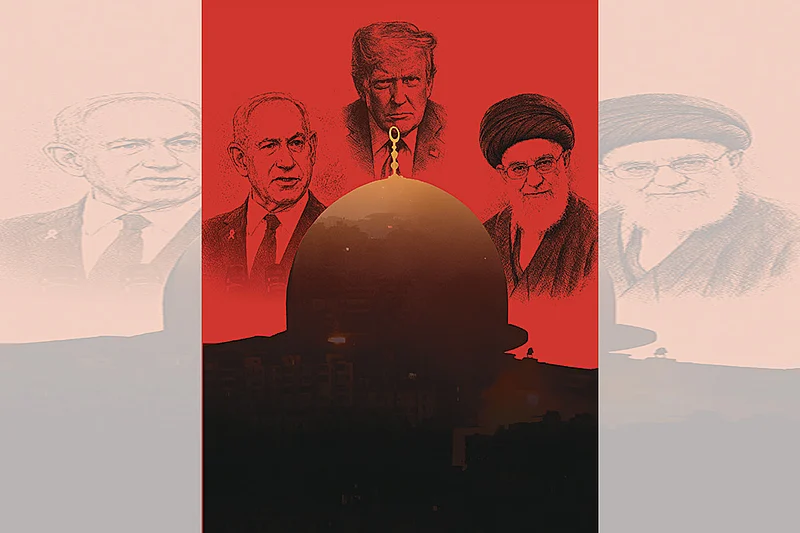
The US Israel Iran religious war 2026 has intensified global attention, as political and military leaders invoke apocalyptic religious language to rally support and justify military actions. From Iran’s declarations of jihad to US and Israeli Christian Zionists framing military strategies as divine missions, religion is increasingly intertwined with geopolitics.
Religious Rhetoric in Modern Conflicts
The Role of Faith in War Motivation
Throughout history, religious language has been used to justify conflicts and rally support. In the current scenario:
-
US and Israeli leaders are influenced by Christian and Jewish Zionist narratives.
-
Iran and its regional allies speak of jihad and the return of the Imam Mahdi.
-
Troops are often framed as “soldiers of faith,” with divine support implied in military campaigns.
This manipulation of religious sentiment echoes historical crusades, where spiritual justification often masked material or strategic objectives.
Historical Parallels
-
The Cold War era saw ideological battles framed as moral struggles.
-
Bob Dylan’s 1963 song With God on Our Side criticized how religion legitimized wars, from native genocide to global conflicts.
-
Today, similar patterns are evident, with religion being used as a tool to garner domestic and international support for aggressive policies.
The US-Israel Strategic Alignment
Christian Zionists and the Return of Jesus
Christian Zionists in the US frame the Iran conflict as part of a larger divine plan:
-
Advocating full Jewish control over ancient Israel territories.
-
Describing President Donald Trump as divinely anointed for leading the Iran campaign.
-
Promoting the construction of the Jewish Third Temple in Jerusalem, currently home to the Al-Aqsa Mosque.
These narratives serve both political and religious purposes, aiming to solidify domestic support while influencing Middle East policies.
Policy Implications
-
Military operations are increasingly justified on religious grounds.
-
Peace symbols, like the olive branch on US coins, are being removed, reflecting a shift in national symbolism.
-
Diplomatic negotiations may be overshadowed by theological rhetoric, reducing room for compromise.
Iran’s Religious Mobilization
Jihad and the Imam Mahdi
Iran leverages religious concepts to frame its defense and foreign policy:
-
Military actions are framed as jihad, or holy war.
-
Leaders emphasize the anticipated return of Imam Mahdi, a central figure in Shia eschatology.
-
Religious ceremonies and rhetoric are used to strengthen public morale and justify resistance against foreign aggression.
Regional and Global Consequences
-
Neighboring countries may be drawn into the ideological conflict.
-
Extremist groups could exploit the rhetoric to escalate local or regional violence.
-
Global diplomacy faces increased difficulty as religious motivations clash with secular political strategies.
The Convergence of Ideologies
Shared Religious Objectives
-
US Christian Zionists and Israeli Jewish Zionists share overlapping goals, particularly regarding territorial claims in Jerusalem.
-
Iran and allied groups mobilize religious sentiment to counter perceived threats.
-
The Middle East becomes a stage where competing religious ideologies drive state actions.
Impacts on Civilians
-
Populations in conflict zones face increased uncertainty and displacement.
-
Religious rhetoric can exacerbate sectarian tensions.
-
International humanitarian efforts may be complicated by ideological framing of the war.
Global Reactions
International Diplomacy
-
UN and European powers express concern over escalating rhetoric.
-
Calls for restraint emphasize secular solutions over theological arguments.
-
Media coverage highlights the unusual prominence of religious motivations in modern warfare.
Public Perception
-
Social media amplifies both religious and political narratives.
-
Citizens in affected nations may feel polarized between ideological loyalties.
-
Historical awareness of past “holy wars” informs skepticism about religious justification for violence.
Key Takeaways
-
The US Israel Iran religious war 2026 highlights the enduring influence of religion in global conflicts.
-
Leaders use apocalyptic and eschatological rhetoric to strengthen internal cohesion and justify military actions.
-
Regional and global stability may be at risk as religious and geopolitical objectives intersect.
FAQs
-
What are the main religious motivations behind the US Israel Iran religious war 2026?
The conflict is driven by Christian Zionist and Jewish Zionist narratives in the US and Israel, and Shia eschatology in Iran, including talk of jihad and the return of Imam Mahdi. -
How has religious rhetoric influenced military strategy in this conflict?
Leaders present military operations as divinely sanctioned, boosting troop morale and justifying aggressive actions while reducing focus on diplomacy. -
What are the potential risks of mixing religion with geopolitics in this war?
Sectarian tensions, civilian displacement, and international diplomatic challenges are likely to increase as theological justifications overshadow secular solutions. -
How has the international community responded to these religious narratives?
Global powers, including the UN and European nations, have expressed concern and urged negotiation over religiously framed military escalation.
Conclusion
The US Israel Iran religious war 2026 demonstrates how religion continues to shape modern geopolitics. While leaders invoke divine authority to motivate troops and justify actions, the intertwining of faith and statecraft presents complex challenges for peace, diplomacy, and regional stability. Understanding the historical parallels and the current ideological motivations is critical for assessing the conflict’s potential trajectory.