Ramadan in Gaza 2026 begins under fragile ceasefire conditions
Ramadan in Gaza 2026 arrives months after a ceasefire took effect in October 2025, marking the first holy month observed since large scale hostilities slowed in the Gaza Strip. Despite the reduction in fighting, daily life remains shaped by destruction, displacement and humanitarian hardship.
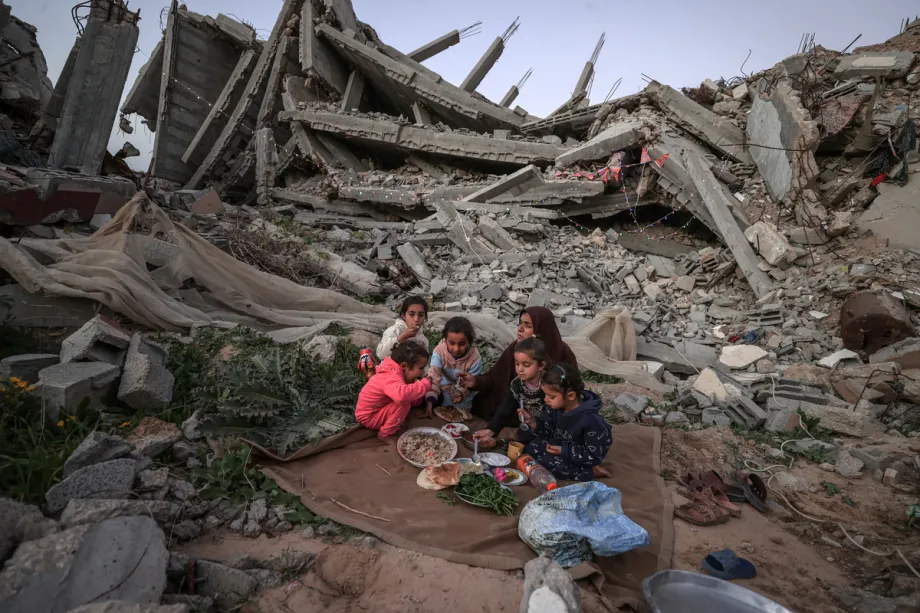
According to reporting by Anadolu Agency, families in Gaza City have broken their fast near homes that were heavily damaged during the conflict. In neighborhoods such as Tel al Hawa, residential buildings remain in ruins, leaving many households in temporary shelters or tents erected beside collapsed structures.
While Ramadan traditionally represents spiritual reflection and family gatherings, this year it unfolds amid ongoing recovery challenges and limited improvements in humanitarian conditions.
Widespread destruction across neighborhoods
Large areas of the Gaza Strip continue to show visible damage. Entire blocks of residential buildings remain uninhabitable, with reconstruction efforts progressing slowly due to logistical and supply constraints.
In place of intact streets and functioning marketplaces, families now gather in displacement camps or beside rubble for iftar. The Maghrib call to prayer echoes across neighborhoods where damaged infrastructure and temporary shelters have replaced once busy communities.
Although the ceasefire has reduced major airstrikes and ground operations, humanitarian agencies report that rebuilding efforts remain constrained by limited materials and funding.
Severe shortages and rising prices
Ramadan in Gaza 2026 is marked by continued shortages of food, fuel and essential services. United Nations assessments indicate that more than 90 percent of the population depends on humanitarian aid for basic needs.
Entry of goods into Gaza remains restricted and inconsistent, affecting supply chains and market stability. Prices of staple foods have risen sharply compared to pre conflict levels, placing additional strain on households with limited or no income.
As a result, traditional Ramadan meals have been simplified in many homes. Dishes that once included meat, rice and sweets are often replaced by basic items such as bread, lentils or vegetables provided through aid distributions.
Local charities and relief groups have organized communal iftar gatherings in displacement camps and overcrowded shelters to assist families facing economic hardship.
Economic collapse and unemployment
The economic situation in Gaza remains critical. International reports estimate unemployment levels exceed 80 percent following widespread destruction of businesses and commercial infrastructure.
With livelihoods disrupted and limited employment opportunities, many families lack purchasing power. Markets operate at reduced capacity due to both supply shortages and decreased consumer demand.
Community solidarity has played a key role in helping families cope. Neighbors frequently share food and available resources during Ramadan in Gaza 2026, reinforcing social support networks amid ongoing uncertainty.
Impact on children and family structures
The conflict has had a significant effect on children and family life. The UNICEF reports that tens of thousands of children in Gaza have lost one or both parents during the months of fighting.
Ramadan gatherings, traditionally centered on extended families, now highlight the absence of loved ones. Families meet in tents or partially damaged homes, where empty spaces at the iftar table reflect personal loss.
Humanitarian organizations continue to provide limited psychosocial support services to children experiencing trauma linked to displacement and instability.
Religious observance continues despite damaged mosques
Many mosques across Gaza sustained structural damage during the conflict. Nevertheless, religious observance remains strong during Ramadan in Gaza 2026.
Where mosque buildings are unusable, worshippers gather in open areas or temporary prayer spaces for Taraweeh prayers. The recitation of the Quran continues in neighborhoods undergoing gradual recovery efforts.
Religious leaders have focused on themes of patience, resilience and community support during sermons delivered throughout the holy month.
Reconstruction efforts face ongoing challenges
Efforts to rebuild homes, schools and public facilities remain slow due to limited construction materials and restricted access to certain goods. International agencies have called for expanded humanitarian access to support large scale reconstruction.
While the ceasefire remains in place, officials describe the situation as fragile, with regional tensions influencing long term stability. Humanitarian groups continue to prioritize food assistance, healthcare access and shelter support during Ramadan in Gaza 2026.
Observing Ramadan amid recoveryRamadan in Gaza 2026 reflects both hardship and continuity of faith. Children have decorated tents and temporary shelters with handmade lanterns and drawings welcoming the holy month.
Families continue to gather for iftar when possible and attend nightly prayers despite damaged infrastructure. Although conditions remain challenging, religious traditions continue to provide structure and meaning during a period of recovery.
As the holy month progresses, Gaza remains focused on humanitarian relief efforts and gradual rebuilding while residents observe Ramadan in Gaza 2026 under complex and evolving circumstances.


 0
0
 0
0