 0
0
 0
0
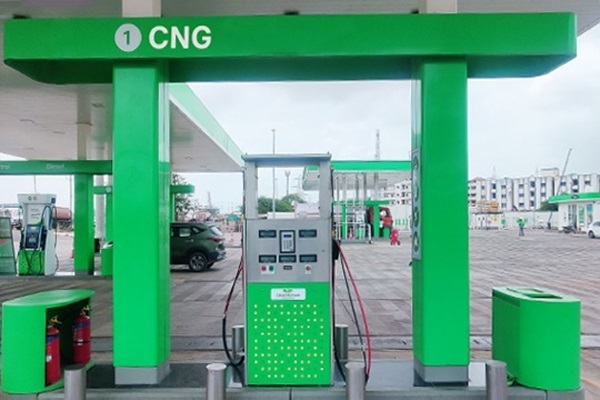
CNG stations rollout Nigeria remains slower than expected despite over $2 billion in private sector investment secured within two years. The Federal Government’s nationwide compressed natural gas infrastructure expansion has missed its 2025 targets, raising concerns about implementation challenges and the pace of delivery.
Investigations by Nairametrics reveal that while funding commitments and policy backing remain strong, actual infrastructure deployment including refuelling stations and vehicle conversion centres has not met projections. The development has shifted attention from headline investment figures to measurable results across the country.
Government targets and infrastructure gaps
The Federal Government introduced the Presidential CNG Initiative in 2023 as part of its energy transition strategy following petrol subsidy removal. The programme aimed to expand gas powered transportation nationwide and reduce dependence on petrol.
Officials set an ambitious target of establishing at least 500 vehicle conversion centres and over 150 compressed natural gas retail outlets by the end of 2025. However, available data suggests progress remains below expectations.
Information published on the initiative’s official platform indicates that since 2023, more than 300 conversion centres and over 40 refuelling stations have been developed. There is limited public data showing how many facilities were delivered specifically within 2025, creating uncertainty about the project’s actual performance.
Earlier figures showed that as of January 2025, Nigeria had about 50 CNG refuelling stations and 193 conversion centres nationwide, highlighting a significant gap between targets and existing infrastructure.
Agencies respond to data requests
Efforts to obtain updated performance data have produced limited results. Officials within the initiative directed inquiries to the Federal Ministry of Finance and the Nigerian Midstream and Downstream Petroleum Regulatory Authority for clarification.
Representatives within these institutions suggested that the initiative office itself should provide detailed records on funding utilisation and infrastructure outcomes. The back and forth response has contributed to concerns about transparency and accountability in project reporting.
Industry observers note that clear year by year performance data is essential for evaluating whether investment commitments are translating into nationwide infrastructure access.
Backstory of the CNG expansion programme
The Presidential CNG Initiative emerged in May 2023 after the removal of petrol subsidies led to higher fuel prices and increased transportation costs across Nigeria. Authorities presented compressed natural gas as a cost relief measure and a long term strategy to boost domestic energy utilisation.
The programme is expected to secure up to $5 billion in private investment by 2027, while also generating employment opportunities across vehicle conversion services, cylinder manufacturing, logistics, and station construction.
Government funding support for the initiative includes N100 billion approved in late 2023, N130 billion allocated in the 2024 budget, and N225 billion included in the 2025 fiscal plan. These allocations were intended to accelerate infrastructure development and provide incentives for vehicle conversions.
Despite these financial commitments, most operational facilities remain concentrated in pilot corridors and major urban centres, limiting access for drivers in many parts of the country.
Industry stakeholders highlight operational challenges
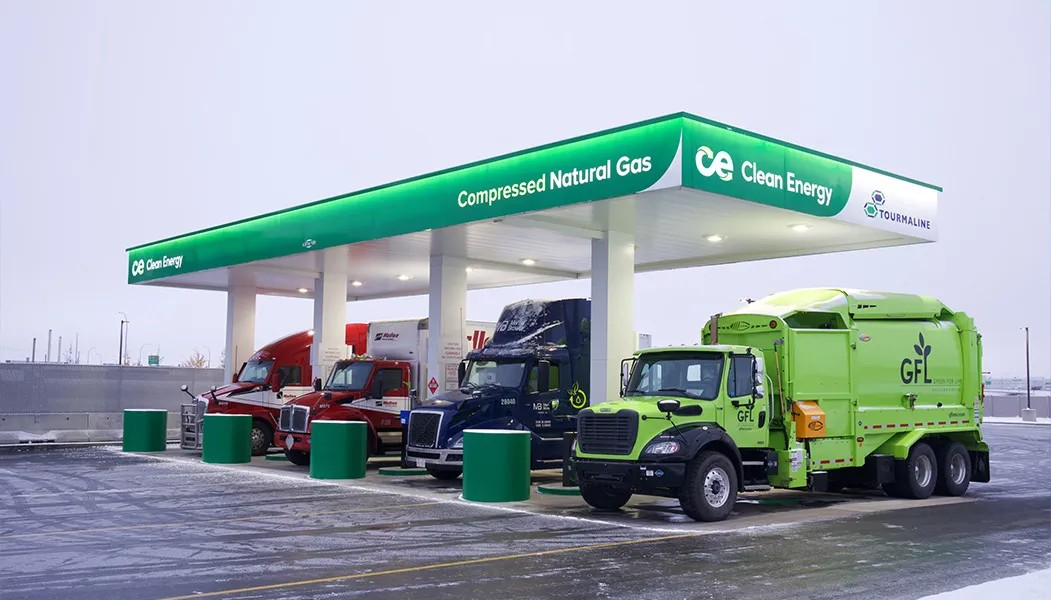
Transport operators and industry participants say the slow CNG stations rollout Nigeria has affected adoption rates. Limited access to refuelling points continues to discourage drivers from converting vehicles.
A representative of the National Union of Road Transport Workers explained that while many drivers support cheaper fuel alternatives, the lack of nationwide infrastructure creates operational risks. Drivers remain concerned about being stranded due to insufficient refuelling stations.
Commercial transport operators also report that planning routes for converted vehicles remains difficult because refuelling points are not consistently available across states. As a result, large fleet operators are hesitant to transition fully to compressed natural gas.
Key bottlenecks slowing deployment
Sector experts identify several factors contributing to the slow rollout of infrastructure. These include delays in importing equipment, limited local manufacturing capacity for conversion kits and cylinders, and lengthy regulatory approval processes.
Other challenges include logistics constraints, inconsistent coordination across state governments, and limited financing access for smaller conversion centres. These issues have slowed construction timelines and restricted nationwide expansion.
Analysts emphasise that addressing these bottlenecks will be critical to improving infrastructure delivery and ensuring wider adoption.
Economic and energy transition objectives
The Federal Government considers compressed natural gas central to its strategy to reduce transportation costs and ease pressure on foreign exchange reserves by shifting demand toward domestically available gas.
Authorities have promoted CNG as a cleaner and more affordable fuel alternative for commercial transport operators, mass transit services, and private vehicle owners. The initiative aims to lower reliance on imported petrol, deepen domestic gas utilisation, and support job creation across the energy value chain.
However, adoption remains uneven due to limited infrastructure coverage outside major cities.
Outlook for CNG stations rollout Nigeria
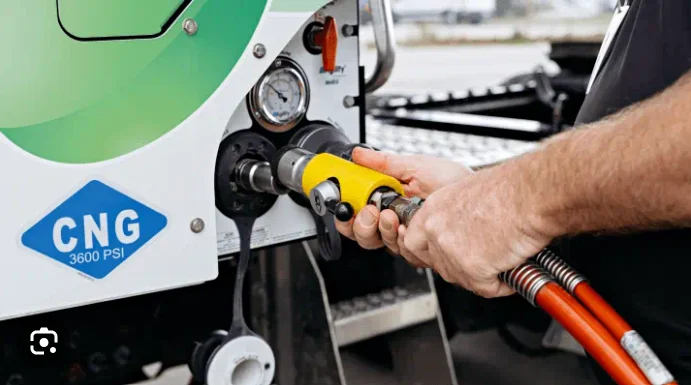
Energy analysts note that while investment commitments remain strong, the success of the programme will depend largely on execution speed and transparent reporting of milestones. Infrastructure delivery rather than funding announcements is increasingly becoming the main performance indicator.
For the CNG stations rollout Nigeria to achieve its objectives, stakeholders say nationwide accessibility, improved coordination among agencies, and faster infrastructure deployment will be essential. The coming years will determine whether the initiative can deliver its promised benefits of reduced fuel costs, improved energy security, and a sustainable transition to gas powered mobility in Nigeria.
For More news, please visit our homepage