 0
0
 0
0
AI-driven labs are at the forefront of a new era in biotechnology, according to Ginkgo Bioworks co-founder Reshma Shetty. Starting in a Cambridge apartment in 2008, Shetty and four MIT colleagues set out to combine software, automation, and biology to make complex biological engineering faster and more precise than traditional bench work alone.
With a vision rooted in Tom Knight’s background in computer science and engineering, Ginkgo sought to engineer biology using the same platform logic applied to software. This approach eventually led to engineered yeast strains for fragrances, and later, a $17.5 billion SPAC valuation when the company went public under the ticker DNA in 2021.
From Foundry to Productized Automation
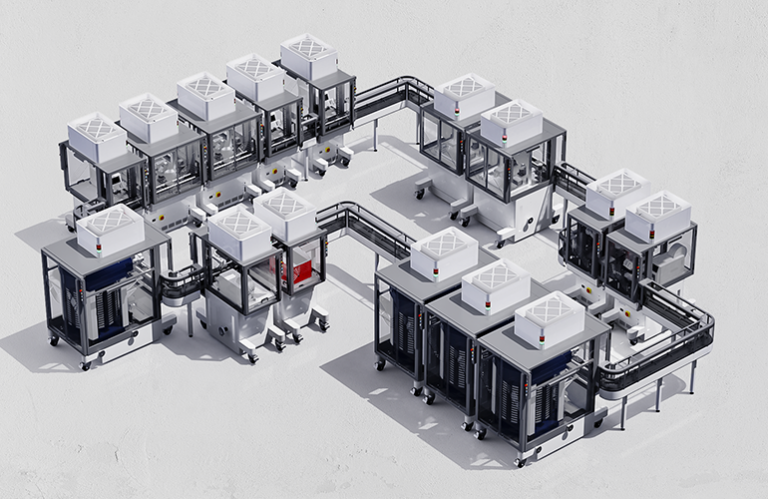
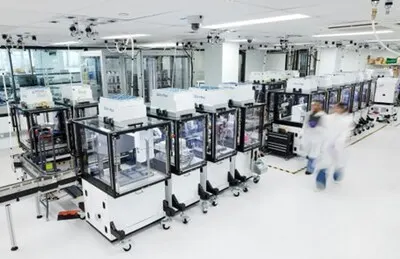
Ginkgo’s journey evolved from creating biological products to developing infrastructure that other labs could use. The company built a “foundry” for programming organisms at scale, later selling modular Reconfigurable Automation Carts (RACs) and associated software. These AI-driven labs allow experiments to be executed autonomously, enabling a wider range of workflows than traditional lab setups.
During the pandemic, Ginkgo’s capabilities were repurposed for testing and biosecurity through the Concentric platform. While that revenue stream has since decreased, the company has leveraged its automated infrastructure to expand into AI-powered experimental design and lab-as-a-product offerings.
GPT-5 and the Automation Breakthrough
In February 2026, Ginkgo published a preprint using GPT-5 to design experiments executed entirely by their autonomous labs. The experiments focused on producing superfolder green fluorescent protein (sfGFP), achieving a cost reduction from $698 per gram to $422 per gram. This combination of AI and robotics not only yielded scientific results but also validated Ginkgo’s commercial model for selling AI-driven lab automation tools.
Shetty described the project as a team effort between humans and AI. Laboratory staff prepared reagents, corrected stock concentrations, improved DNA templates, and provided GPT-5 with the latest scientific literature. “Humans guide the process, AI executes design and analysis,” Shetty explained. “It’s a hybrid team with specialized roles, just like a human-only lab team would have.”
The Role of Human Scientists in AI-Driven Labs
Despite automation, human scientists remain crucial. Shetty emphasized that humans handle quality control, reagent preparation, and experimental troubleshooting, tasks that AI cannot yet fully manage. “You should think of it as a team of humans and AI agents,” Shetty said. The AI excels at synthesizing prior research and analyzing large datasets, while humans ensure the experiments run smoothly in the physical world.
This hybrid approach mirrors traditional lab teams, but with AI augmenting capabilities, speeding up discovery, and reducing costs for targeted objectives.
Specialized AI Agents for Research
Shetty envisions a future where multiple specialized AI agents handle distinct aspects of the research workflow. Some agents could focus on literature searches, others on data analysis, protocol writing, or verification. An overarching agent could coordinate the outputs of these specialized tools, organizing AI and human efforts toward ambitious scientific goals.
This model parallels human research teams, with scalability, specialization, and collaboration built into the AI-driven labs.
Transportation Analogy: From Subways to Autonomous Labs
Ginkgo co-founder Jason Kelly has often compared lab automation to transportation. Walk-up automation in labs is like using a personal car—flexible but limited in efficiency. Integrated automation, like a subway, works well for fixed, repeated workflows but lacks adaptability.
Shetty compared autonomous labs powered by AI and RACs to self-driving vehicles like Waymo. Scientists give directions, but the AI handles execution. Modular hardware and programmable protocols allow experiments to run with precision while retaining flexibility, overcoming the limitations of traditional bench workflows.
Results and Limitations
The 40% cost reduction achieved by GPT-5 and Ginkgo’s autonomous lab applies specifically to sfGFP. When tested on a panel of twelve other proteins, only half produced sufficient protein levels, demonstrating that optimization is target-specific. “You get what you optimize for,” Shetty said. Broader application requires additional rounds of AI-driven optimization tailored to each protein or pathway.
Step 3 of the optimization saw the largest performance jump. GPT-5 leveraged online datasets, computational tools, and relevant preprints while humans refined reagents and improved DNA and lysate quality. This collaborative effort achieved the significant cost reduction, proving the potential of AI-driven labs while illustrating the continuing role of human oversight.
The Future of Bench Science
Currently, about 99% of experiments still rely on human pipetting at the lab bench. Shetty anticipates a shift toward autonomous labs and AI-designed workflows, though she stresses that some experiments will always require human intervention. “There will always be a place for bench science,” she noted, “but right now, the human-centric approach may be limiting opportunities that autonomous systems could unlock.”
AI-driven labs allow researchers to scale up experimentation, accelerate discovery, and reduce costs without replacing humans entirely. The focus is on leveraging automation for routine or high-throughput work while preserving human expertise for complex, nuanced tasks.
AI-Driven Labs and the Human Equation
Ginkgo’s experiments demonstrate that AI-driven labs do not replace scientists; they empower them. Humans still guide scientific direction, troubleshoot errors, and refine experiments. AI agents analyze, design, and optimize, creating a hybrid system that could redefine the future of biological research.
Shetty summarized: “AI-driven labs are a team effort. Humans set direction, maintain quality, and provide context, while AI accelerates design, analysis, and execution. Together, they can achieve what neither could alone.”
For More News, Please Visit Our Homepage